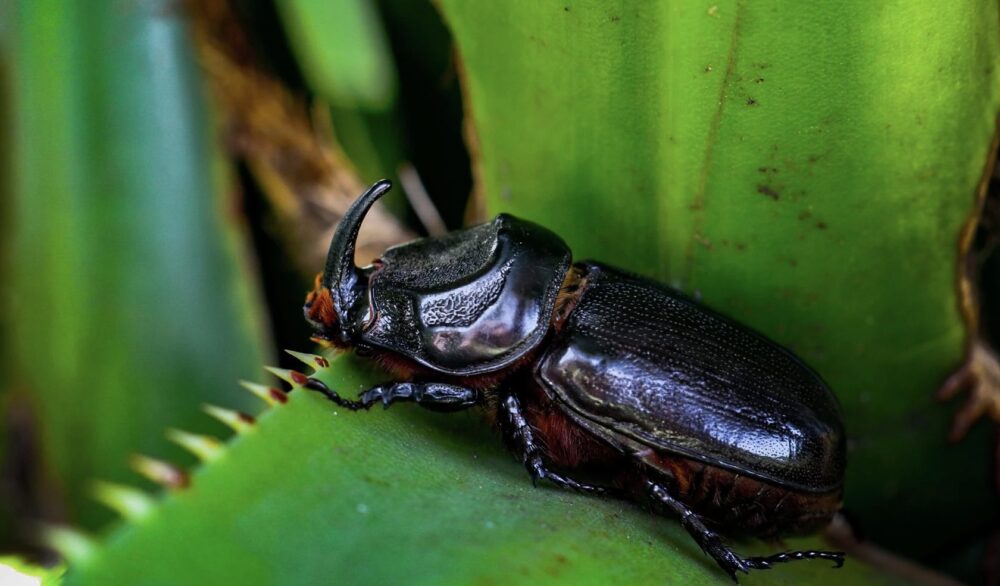
Coconut Rhinoceros Beetle
Coconut Rhinoceros Beetle (CRB)
Species: Oryctes rhinoceros
Sightings of CRB or CRB palm damage should be reported immediately.
The coconut rhinoceros beetle (CRB), Oryctes rhinoceros, was first detected on Kauaʻi in May 2023. This is the first detection in the State outside of Oʻahu.
Adult CRB feed on emerging palm fronds, causing damage that can often be severe enough to kill the plant.
CRB populations can have devastating impacts on various palm species that are foundational to cultural heritage, agriculture, ecosystems, and economies, when out of their native range.
Description
Adults
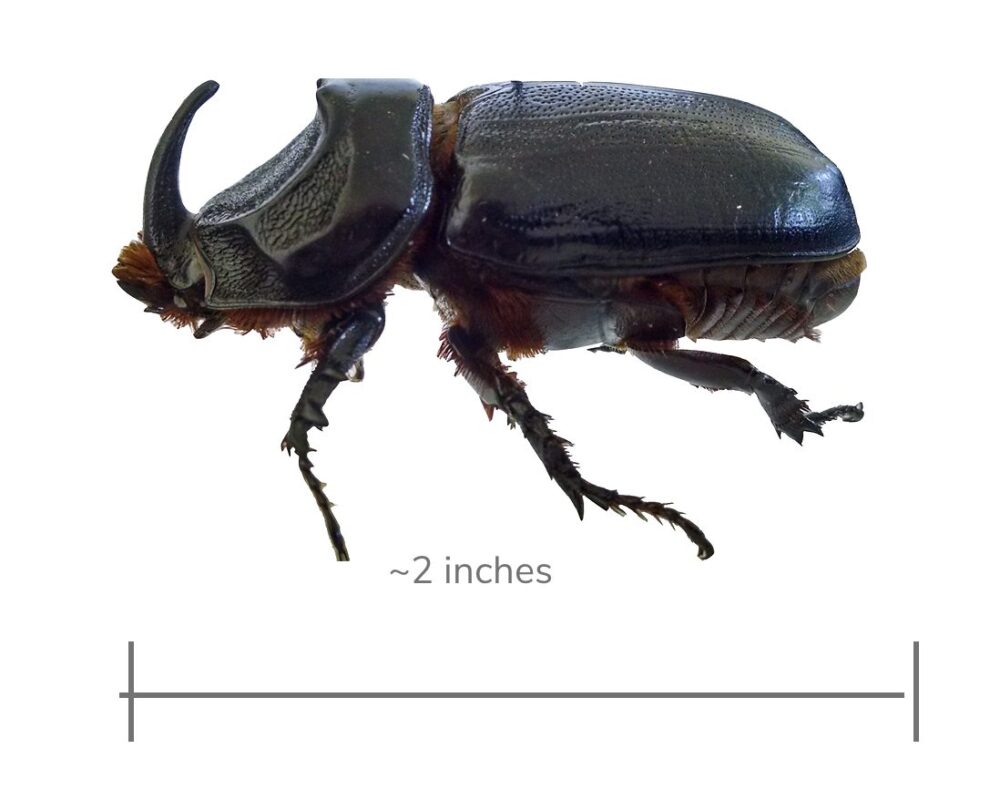
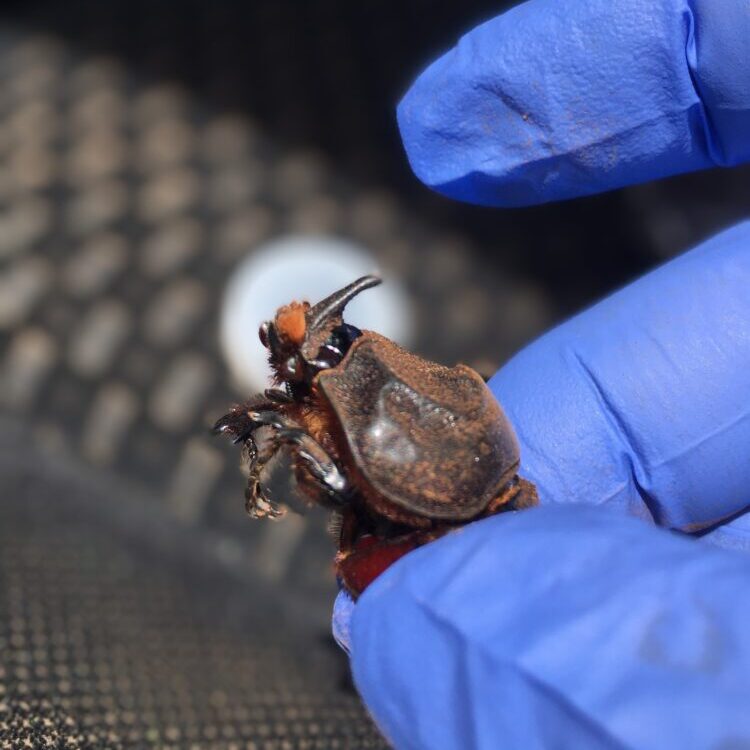
- Adult CRB are black beetles about 2 inches in length
- Native to Southeast Asia, first detected on Oʻahu in 2013
- Both male and female beetles have a visible horn on thier head, though the male horn is usually larger
- They are active at night and can fly.
- Adult beetles live about 3-5 months
- A female CRB lays an average of 90 eggs in her lifetime
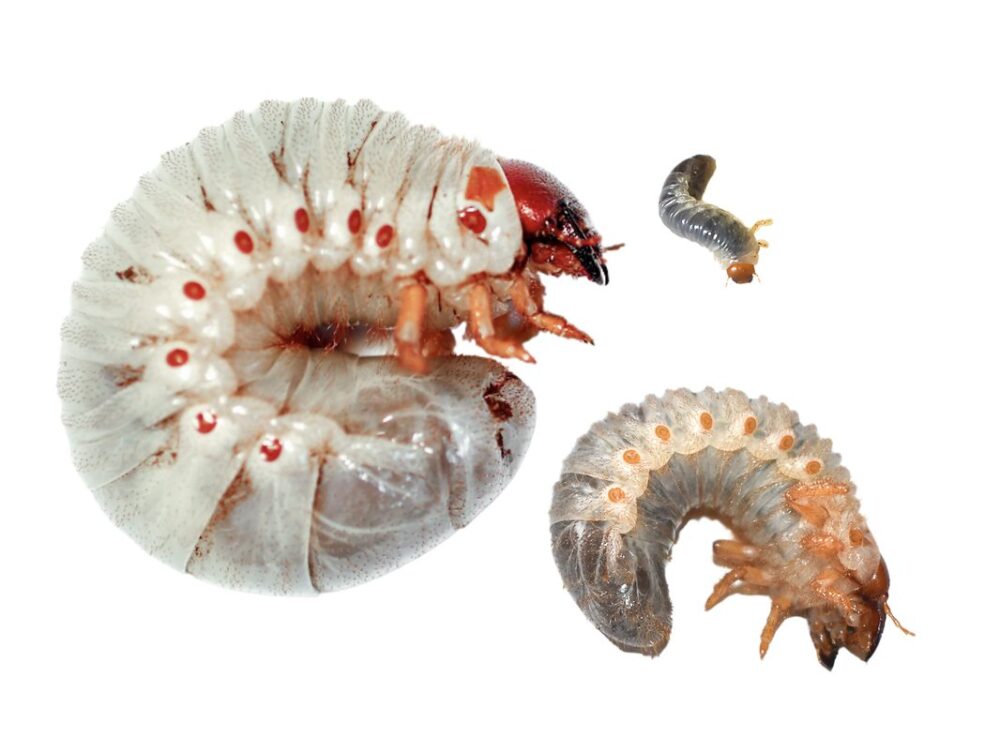
Larvae
- CRB eggs are layed and developed in mulch, compost, decomposing stumps or logs
- Eggs hatch into “C” shaped, larval grubs and grow for 4-6 months reaching up to 3 inches before pupating.
- As larvae, they live and feed on decomposing plant material.
- CRB prefer coconut palm green waste but can survive in most decaying plant material.
Impacts
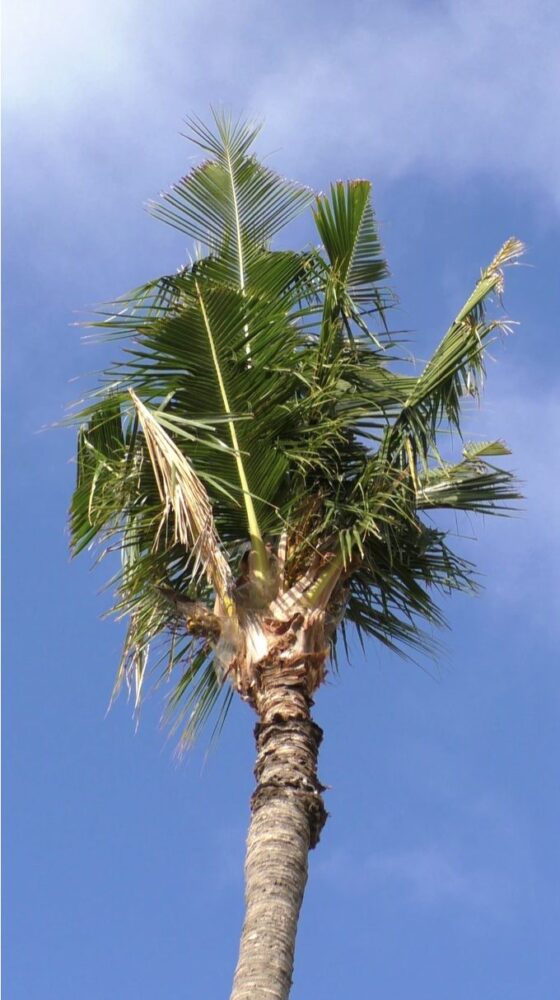
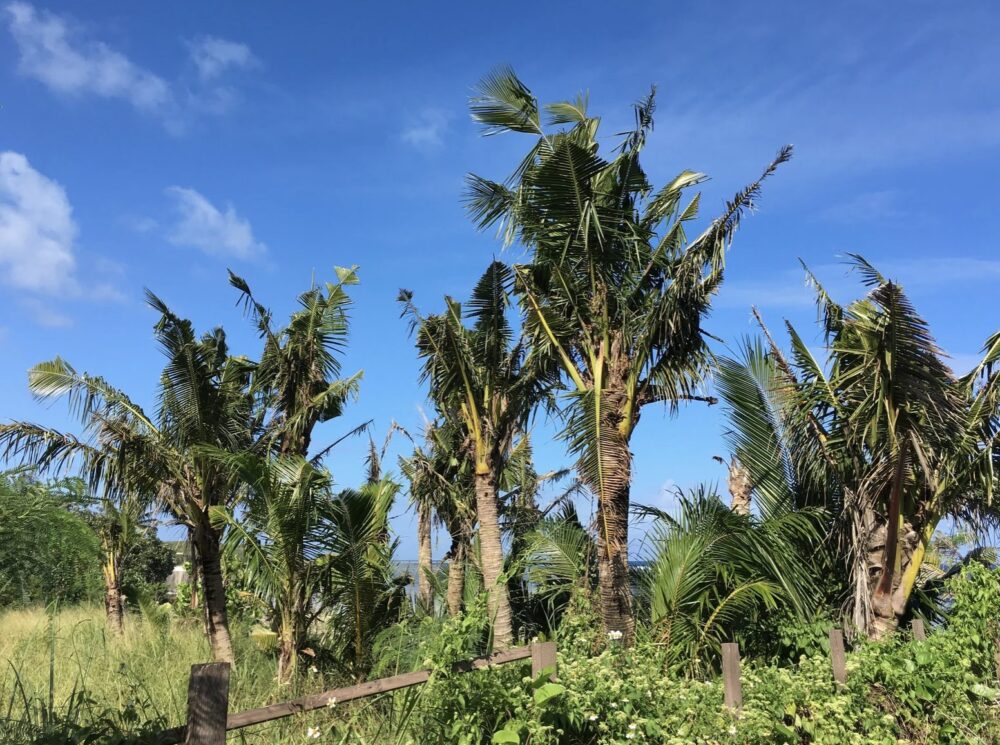
- Adult CRB bore into the crowns of coconut palms to eat the developing leaves
- CRB feed on and can kill coconut, royal, date, and fan palms
- If these palms are unavailable, CRB can host shift to feed on other palms and tropical crops
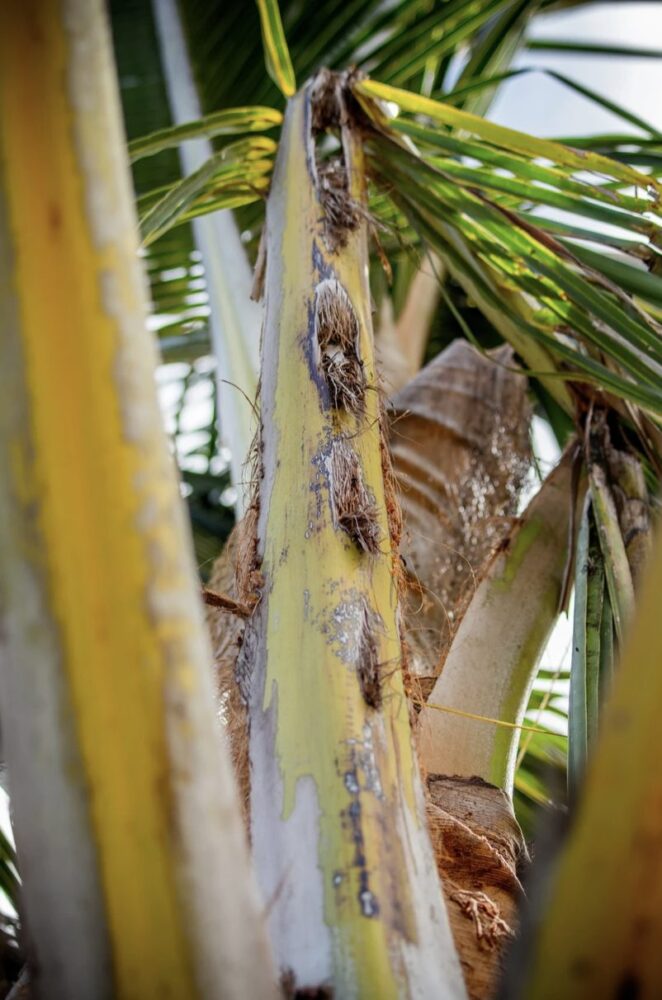
- CRB use their front legs and horn to dig into the crown of trees creating 2 inch bore holes. Then, they use their sucking mouthparts to feed on the juices in the inner spear and heart.
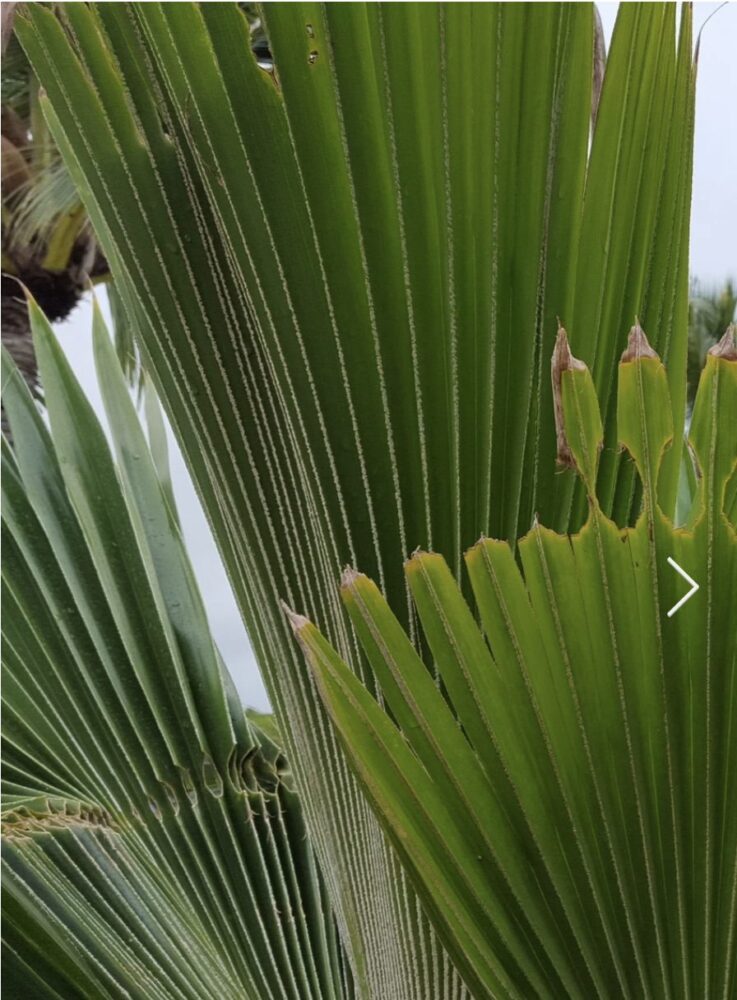
- CRB damaged palm fronds have distinct V-shaped cuts
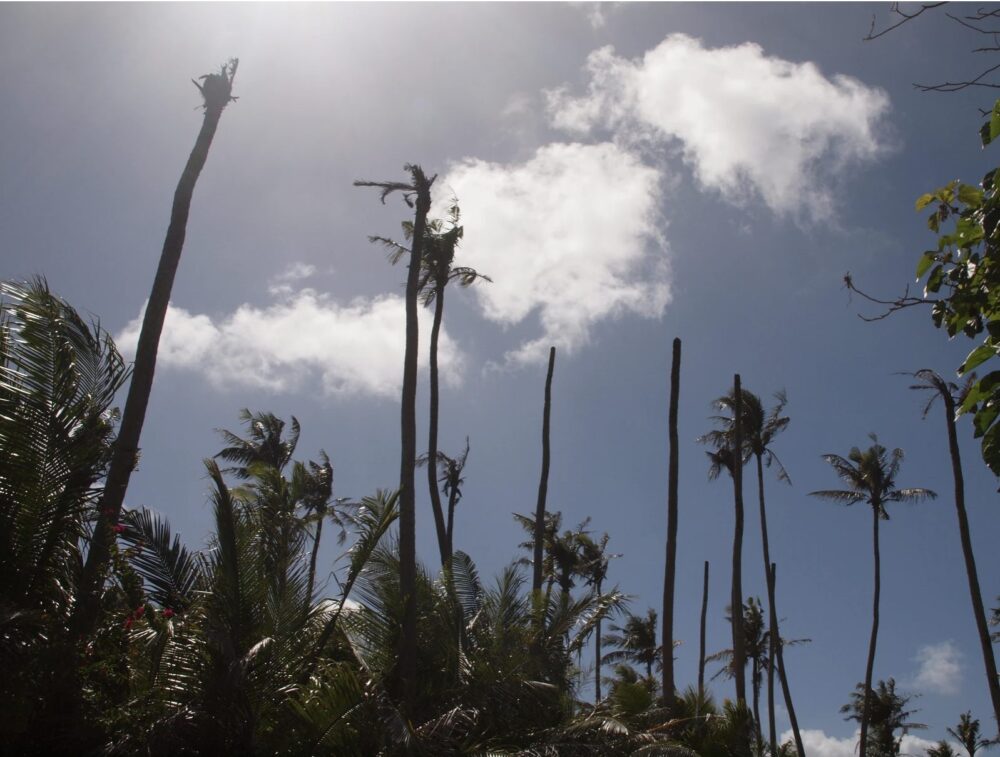
- The damage caused by CRB can kill the tree or leave it susceptible to disease
- CRB threaten Kauaʻi’s endemic and endangered fan palms, Loulu
- Grubs can spread through infested green waste, mulch, soil, and compost
- Although CRB do not bite, they may carry diseases. CRB should not be handled with bare hands if possible
On Kauaʻi
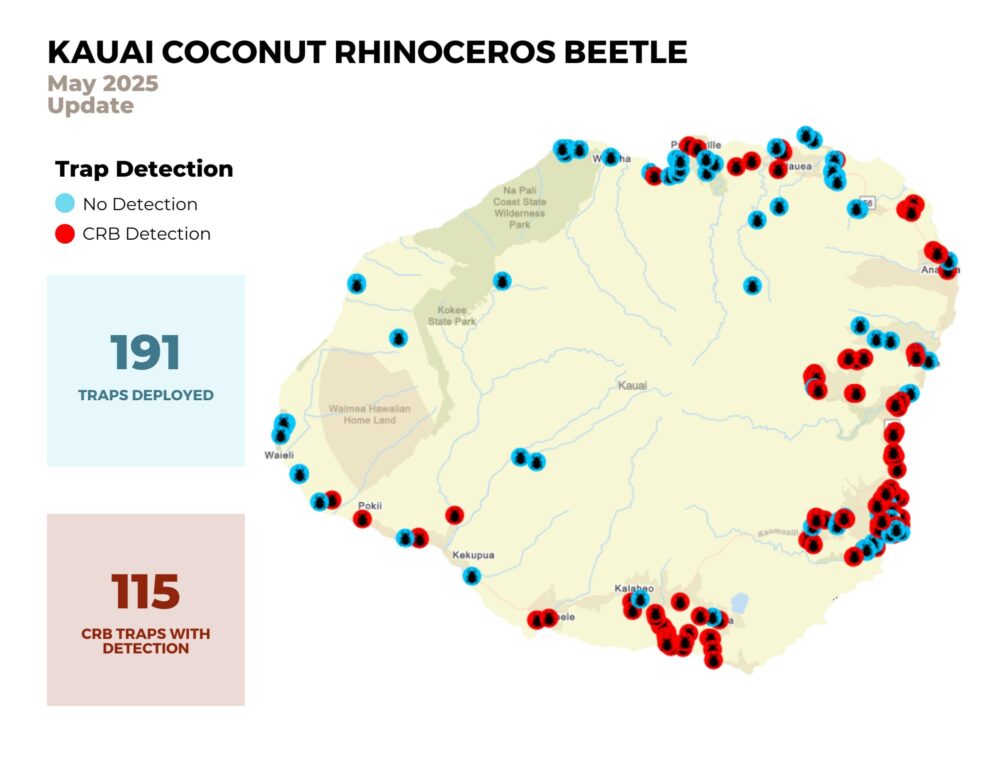
In late May 2023, 2 CRB were detected near the Lihue Airport by the green waste transfer station. KISC found both during routine monitoring of CRB traps placed for early detection around ports of entry as part of the Mamalu Poepoe program.
Response crews from the HDOA, University of Hawaiʻi – CRB Response Team, KISC, and other partners began island-wide detection surveys to identify any additional introductions or possible populations. Additional monitoring traps have been placed at high-risk sites island-wide.
CRB have now been detected in at multiple locations on the island, from Hanalei to Kekaha, highlighting how quickly CRB can spread through contaminated materials.
Detecting an infestation early increases our chances of controlling CRB on Kauaʻi.
For more in depth information about the lifecycle, status of CRB and the scientifically vetted options of sanitation, control and treatment check out our video below
What We Can Do
We Need your help to prevent the spread of Coconut Rhinoceros Beetle

1
Inspect and Report
- Inspect all potential breeding material and host plants.
- Report any damage or specimens to 643Pest.org
- Host a CRB monitoring trap on your property Contact KISC

2
Do Not Transport
Geographic spread of CRB appears to be largely due to human-vectored spread through accidental movement of host material such as palms or green waste.

3
Manage Compost Piles
- Do not stockpile or dump infested material or
- Decomposing plant matter
- Transport to safe green waste facility
- Get trained on how to best manage materials Contact us Here
Look-a-likes:
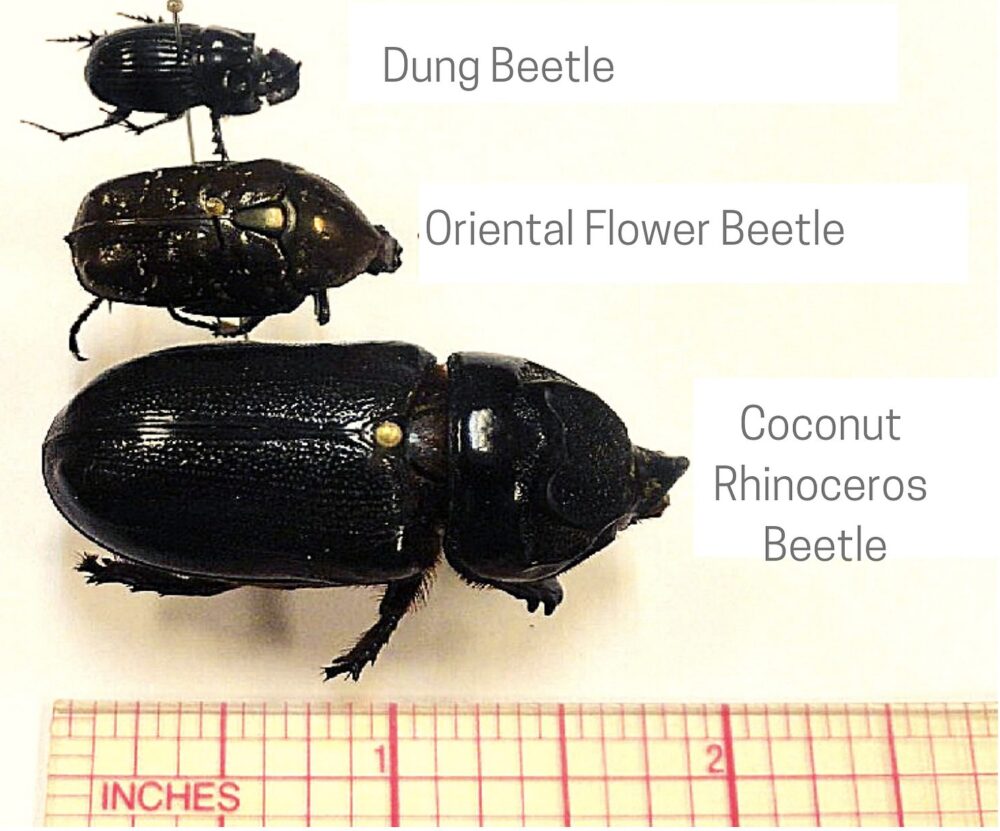
Oriental Flower Beetle: OFB
Protaetia orientalis, P. fusca
Oriental flower beetle or OFB is one of the most common look-alikes of the coconut rhinoceros beetle (CRB). Unlike CRB, OFB feed on overripe fruit, flower nectar, flower pollen, and sap from a variety of plants. They are a common widespread pest, with no control program.
Black Dung Beetle
Copris spp.
At first glance, dung beetles can look similar to CRB in that they are solid black and sometimes have an apparent horn. Dung beetles are significantly smaller than CRB reaching about 1.5 cm in length and have a rigid wing case.
Although dung beetles are not native, they are beneficial and were intentionally introduced to Hawaiʻi for the ranching and farming industry.
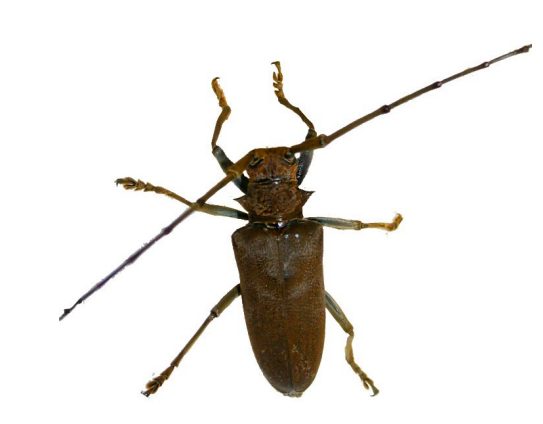
Queensland longhorn beetle
Acalolepta aesthetica
The Queensland longhorn beetle or QLB is a large invasive beetle established on the East side of Hawaiʻi Island. QLB is a major pest to tropical crops and should be reported immediately if found. For more information visit: https://www.biisc.org/qlb/