Summary
Welcome to the Invasive Informant, sponsored by Kaua’i Invasive Species Committee. KISC works across Kaua’i to prevent, control, or eliminate the most threatening invasive plant and animal species in order to preserve Kauaʻi’s native biodiversity and minimize adverse ecological, agricultural, economical, and cultural impacts. This month, we discuss the connection between native ʻōhiʻa forests and coastal ecosystems.
We often talk about the mauka to makai connection in Hawaiʻi. This ridge-to-reef way of thinking suggests the health of our forest is critical to the health of our ocean. Weʻve talked here before how a biodiverse ʻōhiʻa forest functions like a giant sponge, capturing moisture, replenishing underground aquifers, slowing erosion, and protecting marine ecosystems.
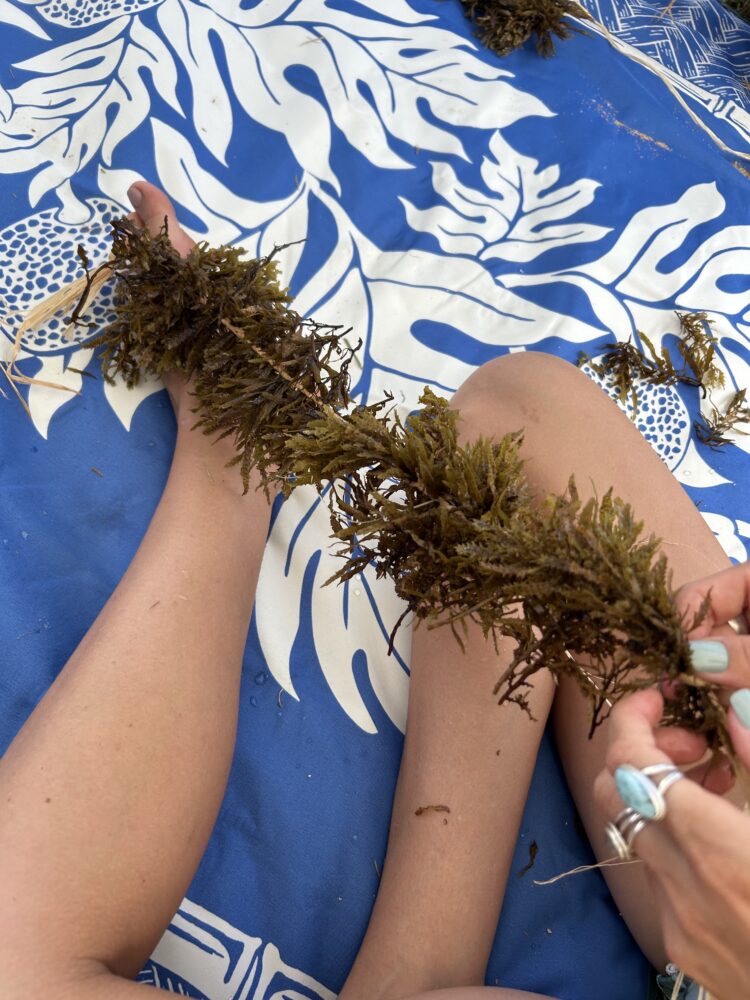
These protections include limu, seaweed, once one of the most important food sources in Hawaii. Whatʻs more terrestrial and marine plant names often mirror each other, illustrating traditional Hawaiian understanding of this land-to-sea connnection.
In the Hawaiian creation chant known as the Kumulipo, youʻll find the ʻēkaha fern paired with limu ʻēkaha. And ʻākala, commonly known as Hawaiian raspberry, paired with limu kala.
On Wednesday, March 25th Haylin Chock will share a talk titled From the Mountains to the Sea: The Importance of Limu in Connection to Watershed Health. This is the 10th episode in the virtual series known as Forest Talk, produced by Kauai Invasive Species Committee. You can watch our previous nine Forest Talk episodes here.
| Join us for our next Forest Talk with guest speaker Haylin Chock as she shares about the impacts of invasive species in the watershed and their effect on our intertidal plants. Haylin is the outreach specialist at KISC and has volunteered with the Hosea Lovell foundation focused on limu restoration in Anahola. She will also share about limu in the Kumulipo and the Kiaʻi that protect them. This event will take place via Zoom. Registration required. |