Kauai Invasive Species Committee (KISC)

DONATEREPORT A PEST

  • About Us
    • Who We Are
    • Job Opportunities
  • What We Do
    • Early Detection
    • Plant Early Detection Program
    • Control & Eradication
    • Rapid Response
    • Rapid Ohia Death Response
    • Community Outreach
    • Plant Pono Program
    • Little Fire Ant Program
  • Resources
    • KISC Reports
    • Educational Tools
  • Invasive Pests
    • Animals & Insects
    • Diseases & Pathogens
  • Invasive Plants
    • No Grow
    • Be On the Look Out
    • Do Not Plant List
  • Get Involved
    • Plant Pono Program
    • Environmental Education
    • Calendar
    • Bio-sanitation
    • Wao Walk Mural
      • Native Mural
      • Invasive mural
  • News

Invasive Informant: ʻŌhiʻa Lehua Phenology

June 3, 2024 by Kim Rogers

Summary

Welcome to the Invasive Informant, sponsored by Kaua’i Invasive Species Committee. KISC works across Kaua’i to prevent, control, or eliminate the most threatening invasive plant and animal species in order to preserve Kauaʻi’s native biodiversity and minimize adverse ecological, agricultural, economical, and cultural impacts. This month, we we discuss the lifecycle of ʻōhiʻa lehua.
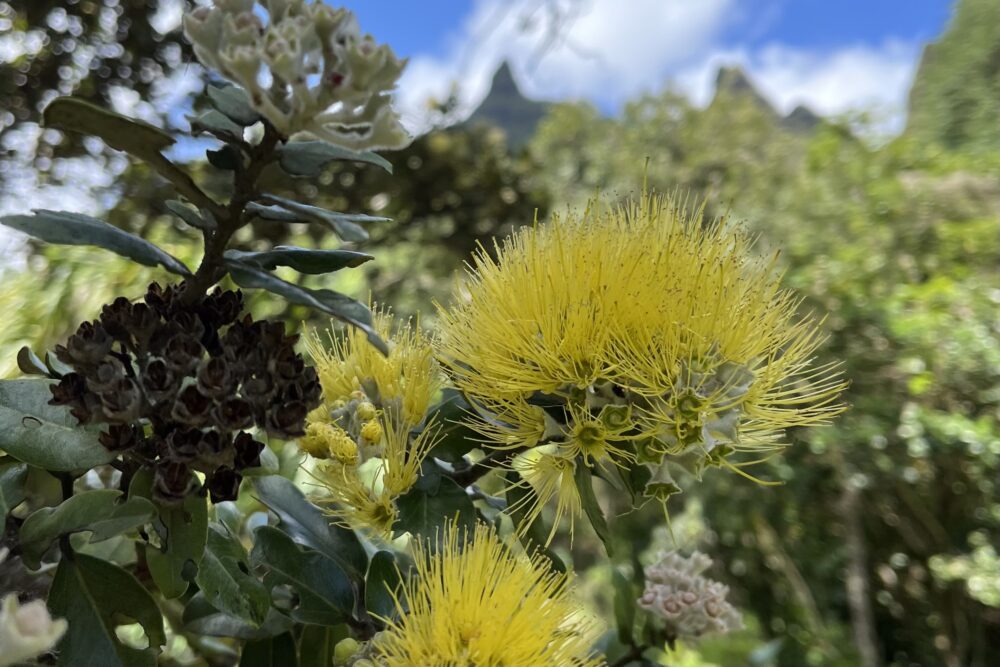
Right now, you may see lehua blossoms decorating ʻōhiʻa in the forest. You may even have lehua on trees in your own yard.

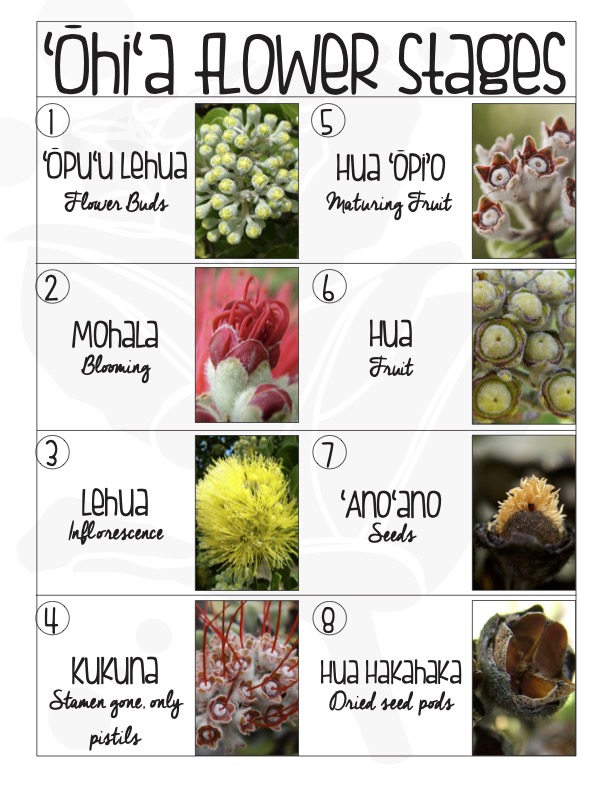
Did you know what we think of as the flower on ʻōhiʻa–those needle-like projections—is actually a constellation of stamens surrounding a pistil, making up the reproductive parts of the flower. The petals of lehua are actually quite small, cupping the base of the stamens and pistil. 

Some stamens may already be falling off your lehua. Last to go is generally the pistil. Once the pistil falls off, the next stage of development is fruiting. Each fruit is light green in color and about the size of a small pea. In time, the fruit will turn brown and dry out, leaving a seed pod containing up to 200 tiny ʻōhiʻa seeds. This process from blooming to fruiting to seeding can take months. Lehua you see in full blossom today may not be ready to release seeds for six or eight months.

One way to help ensure the survival of ʻōhiʻa for generations is to help it re-establish in places it was once plentiful, likely your very neighborhood. If you have ʻōhiʻa growing—and blooming—in your yard, take note of the blooming-fruiting-seeding lifecycle. Maybe youʻll be inspired to gather seed from your trees and grow more ʻōhiʻa for family and friends.

Filed Under: Blog, Rapid ʻŌhiʻa Death, ʻŌhiʻa Tagged With: 'Ōhi'a, 'Ōhi'a lehua day, forest, hawaii, rapid 'Ōhi'a death, trees

Previous Post: « Live Mongoose Captured on Kauai!

Summary

Welcome to the Invasive Informant, sponsored by Kaua’i Invasive Species Committee. KISC works across Kaua’i to prevent, control, or eliminate the most threatening invasive plant and animal species in order to preserve Kauaʻi’s native biodiversity and minimize adverse ecological, agricultural, economical, and cultural impacts. This month, we we discuss the lifecycle of ʻōhiʻa lehua.

Kauaʻi Invasive Species Committee (KISC)

7370K Kuamoo Road, Kapaa, HI 96746
(808) 821-1490


KISC@hawaii.edu

Sign Up to Receive Updates

KISC Newsletter
Save ʻŌhiʻa Newsletter
PCSU logo

© 2026 Kauai Invasive Species Committee (KISC) • Sitemap • Designed by Websites with Aloha • Log in