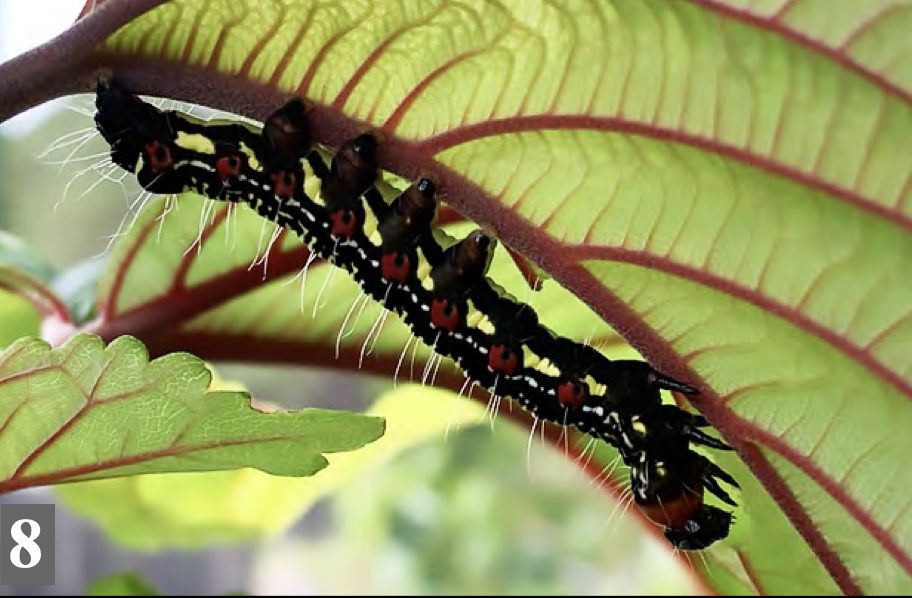
Ramie moth (Arcte coerula)
REPORT IF SEEN: This species was recently detected on Kauaʻi for the first time. If you see it please report it.
Ramie Moth (Arcte coerula)
Species: (Arcte coerula)
The ramie moth caterpillar, an invasive insect that feeds on native Māmaki and other endemic plants, was detected for the first time on Kauaʻi in December of 2025. Sightings of suspect caterpillars, moths, or damaged Māmaki plants should be reported immediately.
KISC, DLNR – Division of Forestry and Wildlife (DOFAW), Department of Agriculture and Biosecurity (HDAB), and partners are working together to determine the extent of the infestation and identify next steps in the response.
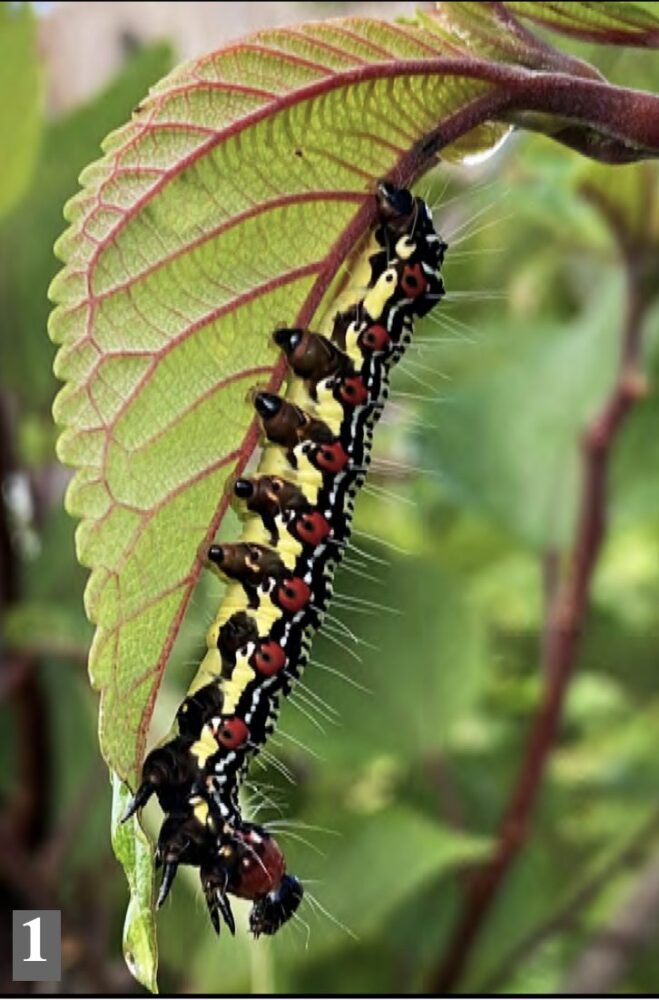
Martinson
Image credit: HDAB
Description
- Young caterpillars are green with a black head and markings
- Later instar caterpillars are covered sparsely in long white hairs, have red dots along their side, and can be either yellow or black
- Caterpillars range from 2 mm – 10 cm
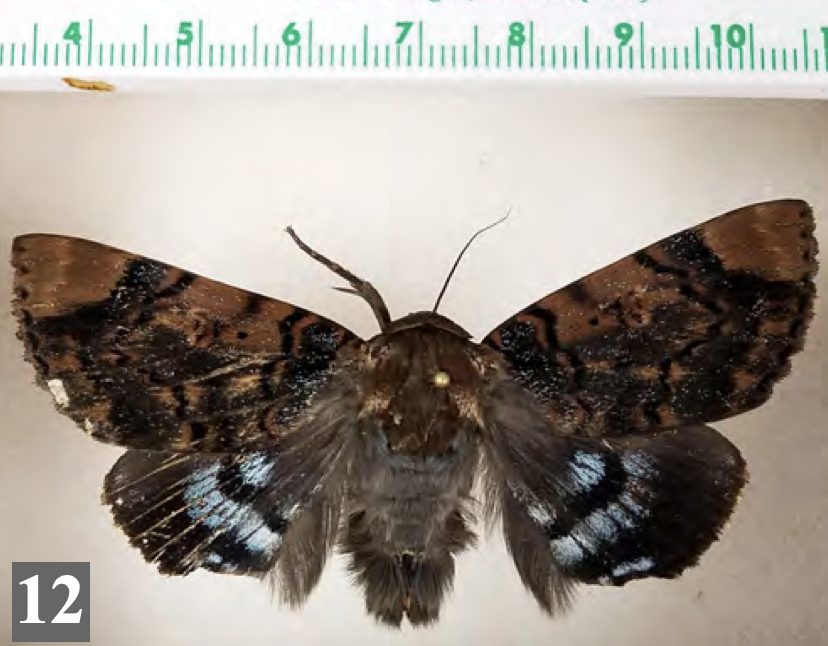
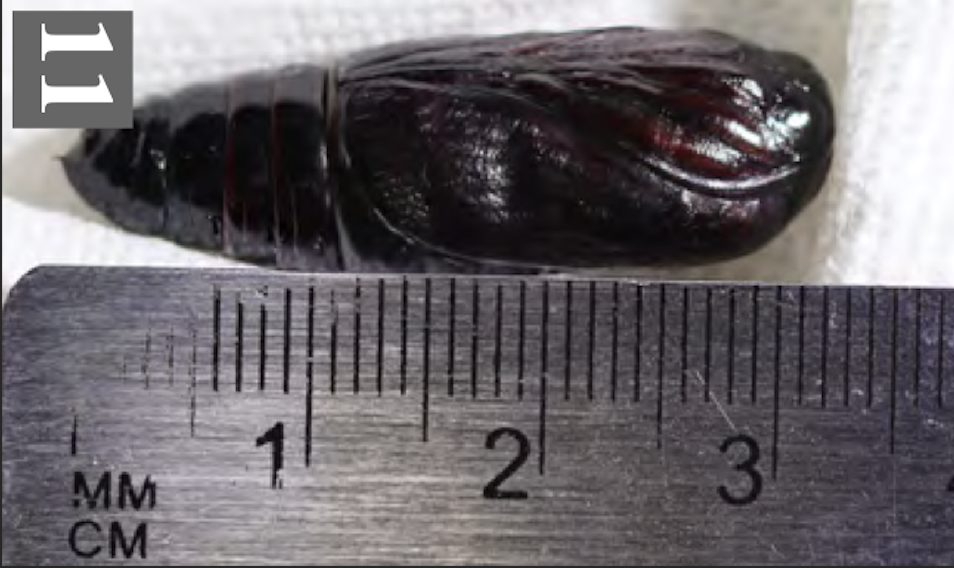
- Adult moths are around 3 cm from head to the tip of the abdomen with a 6-9 cm wingspan
- Moth wings are brown with black markings and scalloped edges
- Hind wings have silver-white markings
Impacts
- Destroys māmaki and Olonā plants
- Competes for the same resources as the native Kamehameha butterfly
- Also feeds on other members of the nettle family
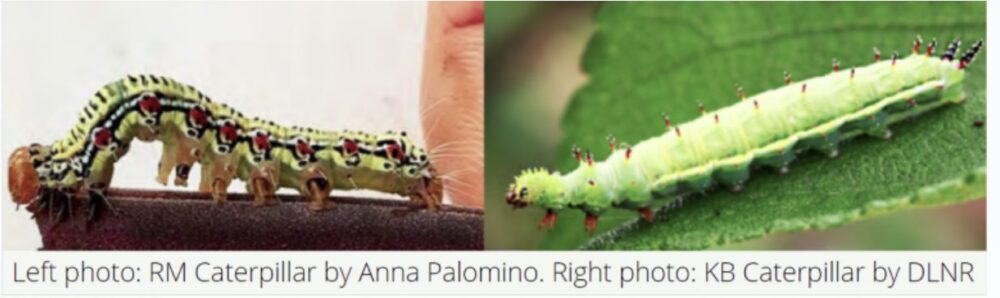
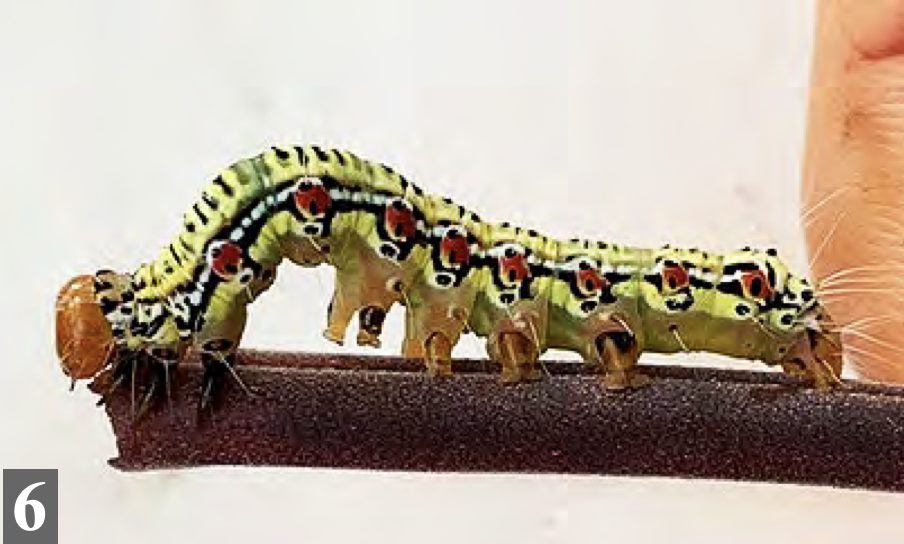
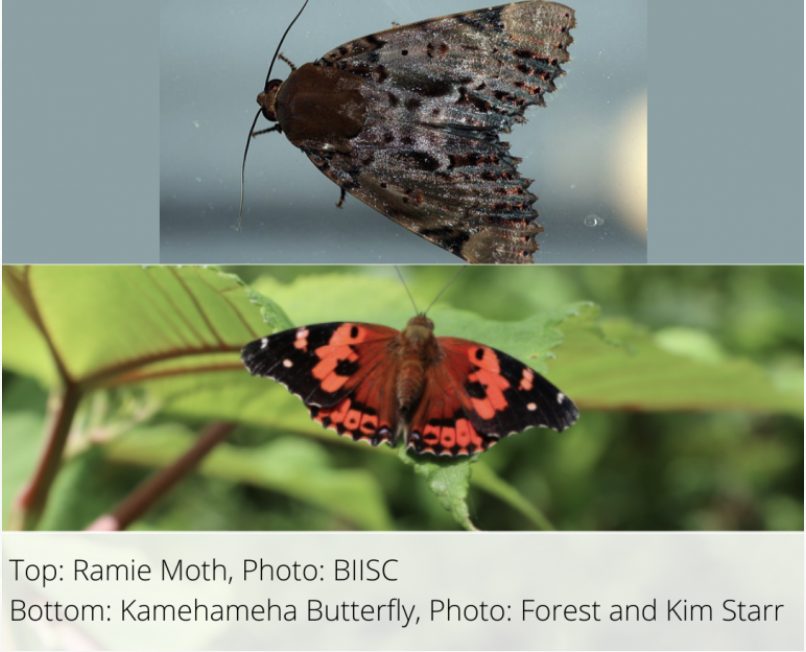
Kamehameha Butterfly vs Ramie moth
“Although the butterfly is historically known from all the main Hawaiian Islands (Kauaʻi, Oʻahu, Molokaʻi, Lanaʻi, Maui, and Hawaiʻi), it is no longer found in some areas where it used to be common (e.g. Tantalus on Oʻahu), and it appears to be declining.” (CTAHR)
The Kamehameha butterfly is one of two species of butterfly that are endemic to Hawaiʻi. The Kamehameha butterfly looks similar to the Ramie moth so it’s important to be able to differentiate between the two, as to not kill an important native insect.
How you can help: Report sightings
We are asking the community to survey and monitor their māmaki plants for damage and ramie moth caterpillars. Report suspect feeding damage, caterpillars, and adult moths. Early detection of the ramie moth with help from residents will play a critical role in the prevention of a rapid island-wide spread into our native forests. If you see a ramie moth or ramie moth caterpillar on māmaki or other host plants, please take photos and report the sighting immediately. Photos and reports can be submitted to 643pest.org or email KISC at kisc@hawaii.edu
Learn to recognize the differences between the caterpillars of Ramie moth, Kamehameha butterfly, Udea stellata (another native species) and Green garden looper (invasive species). This is to make sure you don’t mistakenly kill native caterpillars.
Learn more about feeding damage and ramie moth identification here.
Feel free to contact KISC for any questions.
Pest Alerts and Publications:
- Kauai Ramie Moth Detection News Release – DLNR
- New Pest of Māmaki – CTAHR
- New Pest Advisory – HDOA
- Ramie Moth – BIISC
- The Impact on Māmaki by Ramie Moth – MIISC
- Ramie Moth News Release – DLNR