Aʻohe hana nui ka aluʻia. | No task is too big when done together.
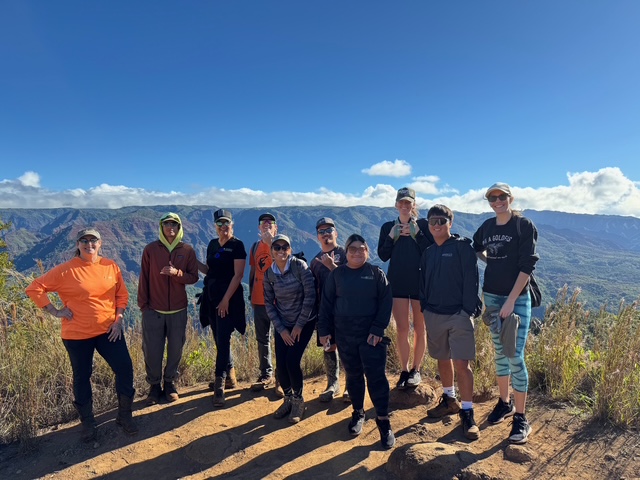
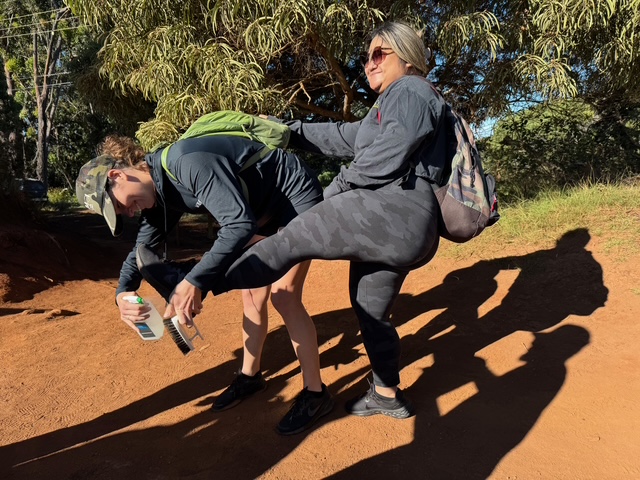
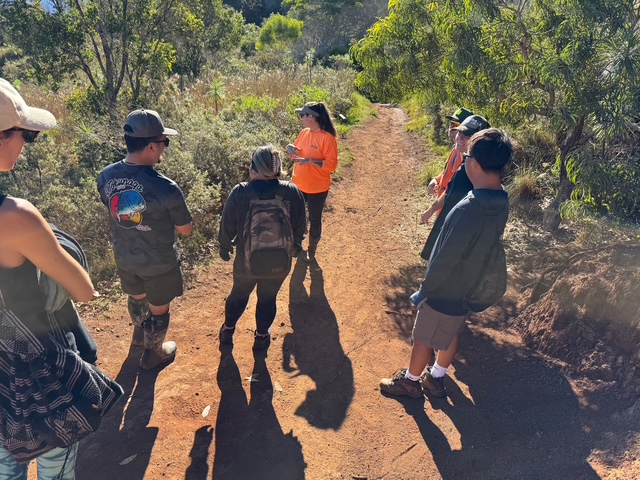
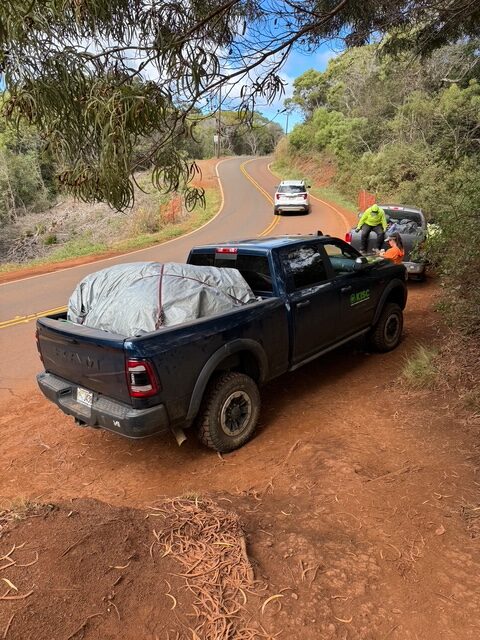
Mahalo to employees from Keokiʻs Paradise restaurant who showed up ready and willing to pull invasive beard-grass from around Iliau Trail in Waimea Canyon State Park, then, hauled it out, and provided us with a yummy lunch! Mahalo nui.
This effort is supported by Hawaiʻi Tourism Authority through the Kahu ʻĀina Program.
Importance of ʻŌhiʻa Forests
The most abundant tree in the native forests of Hawaiʻi is also the backbone that holds the forest and, therefore, our watersheds, together. ʻŌhiʻa is endemic to Hawaiʻi, meaning you won’t find it anywhere else in the world.
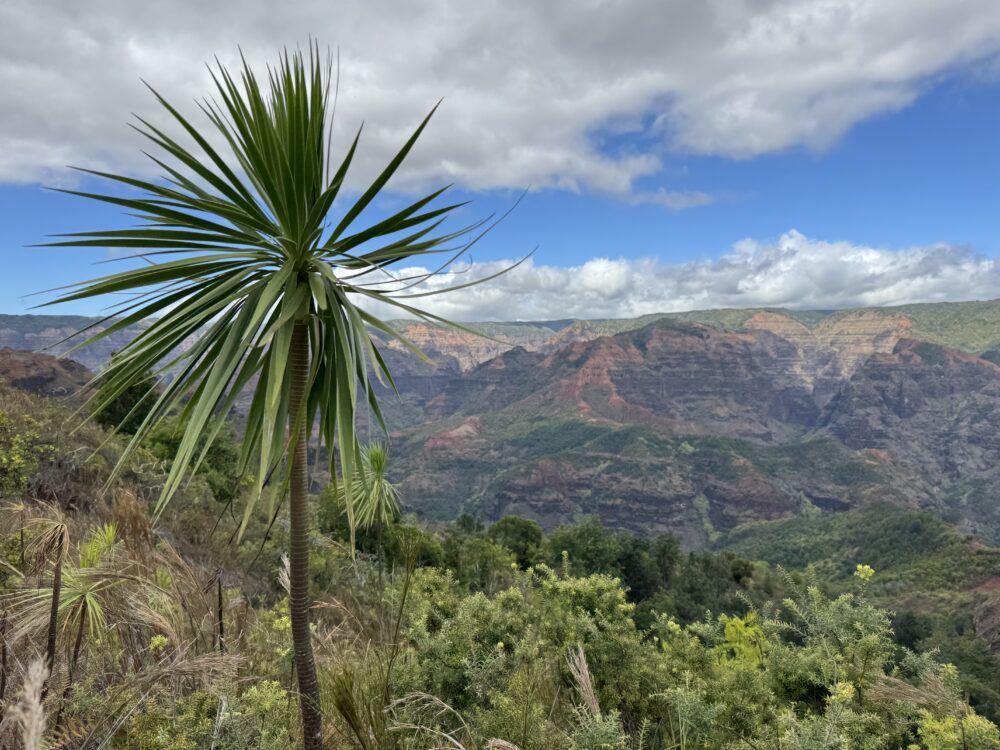
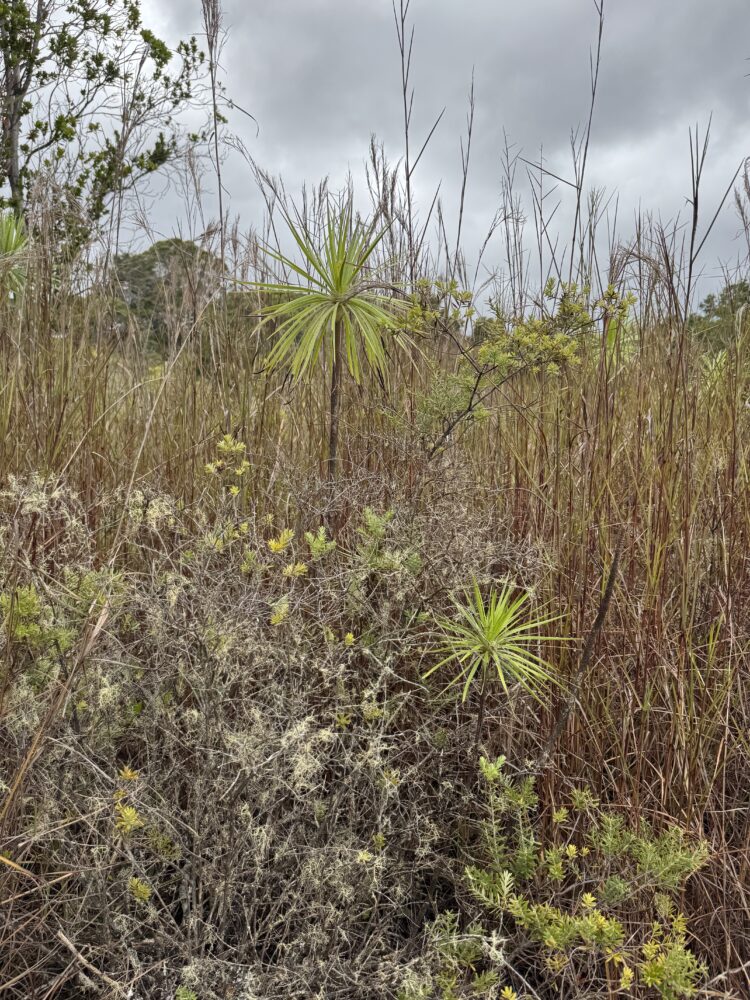
‘Ōhi‘a forests also provide habitat for rare forest birds like ʻiʻiwi, ʻapapane, ʻakikiki, and ʻanianiau. Hundreds of native arthropods have been collected from ‘ōhi‘a canopies. And ʻōhiʻa welcome a wide variety of unique plants into their welcoming branches, leaves, and roots. One such plant is iliau. Iliau is not only endemic to Hawaiʻi, it’s endemic to Kauaʻi. And the best place to see iliau is along the trail named after this special species.
The Threat of Invasive Species
Unfortunately, many of the rare and endemic species of Hawaiʻi are threatened by invasives species. A non-native grass is invading iliauʻs habitat. And a fungal disease is killing ʻōhiʻa and threatening Kauaʻiʻs watersheds. But as the Hawaiian proverb suggests, no task is too big when tackled together. Let’s pull together to save the native forests of Hawaiʻi. Kauaʻi Invasive Species Committee created this trail guide to raise awareness of the need to stop the spread of one particular invasive species, beardgrass, to help protect habitat for ʻōhiʻa and iliau and numerous other native plants. Support for this effort is provided by Hawai‘i Tourism Authority through the Kahu ‘Āina Program.
Iliau Trail Plant Guide