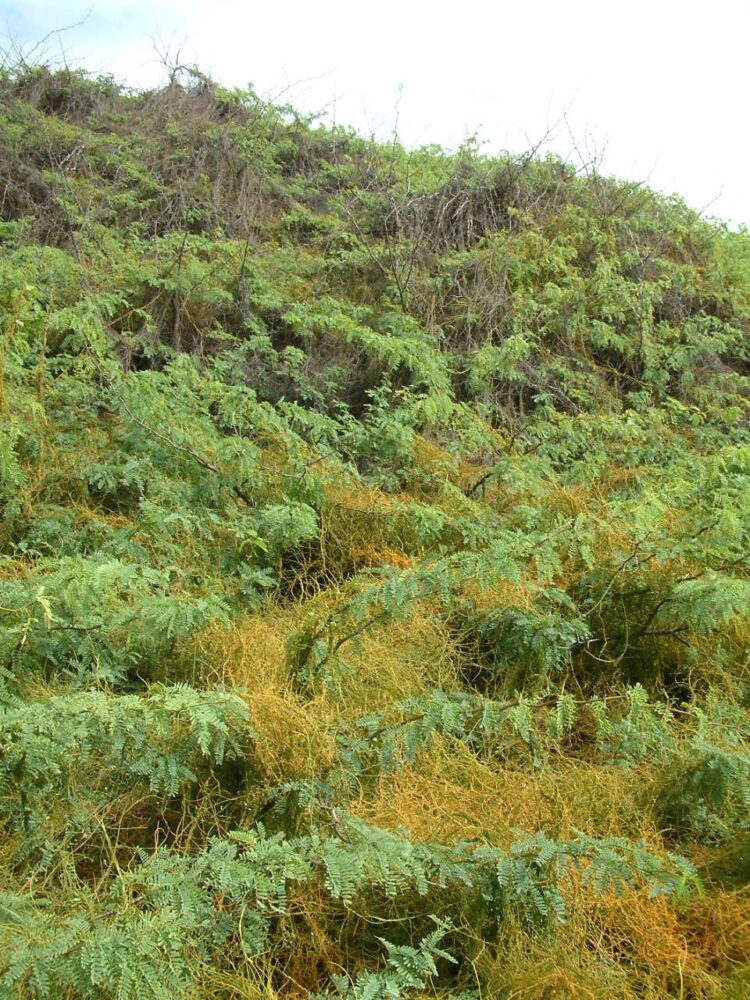
Long-thorn Kiawe
REPORT IF SEEN: This species is currently controlled by KISC, if you see it please report it.
Long-thorn Kiawe
Species: Prosopis juliflora
Family: Fabaceae
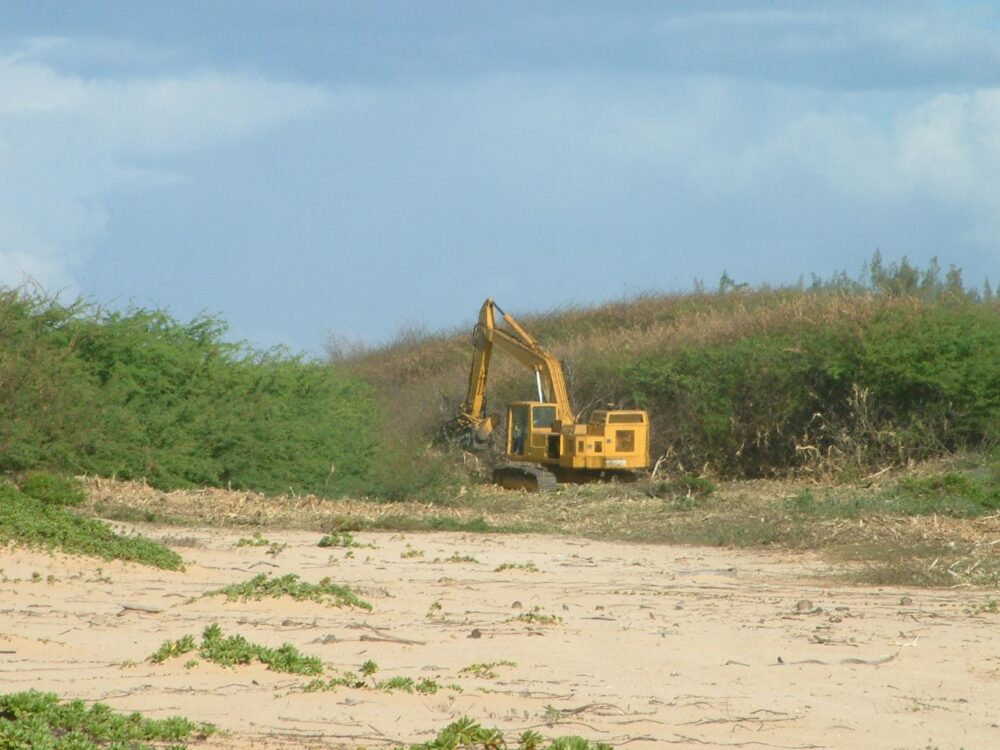
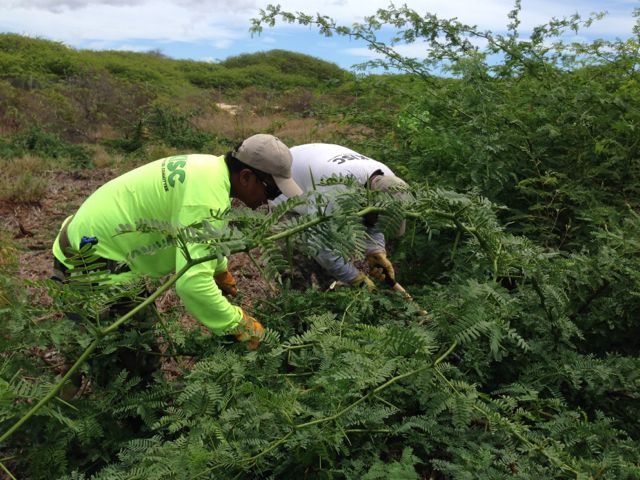
KISC is actively controlling this species. Sightings of this pest should be reported immediately. If you suspect that you have any of our targets on your property, KISC will survey and if confirmed, will remove it for free.
Considered very invasive and is on the Hawaii State Noxious Weed List.
Description
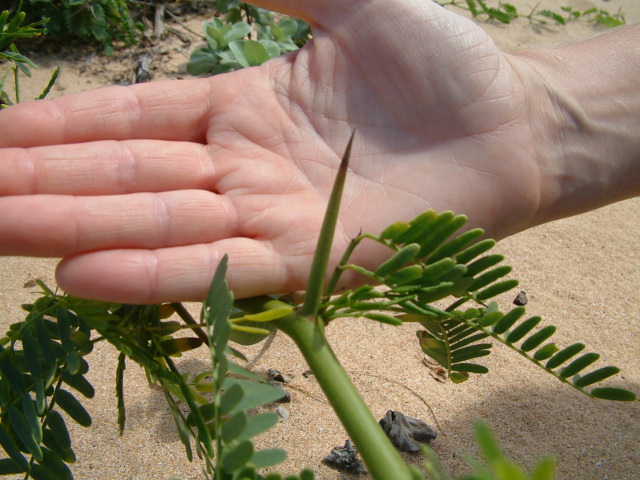
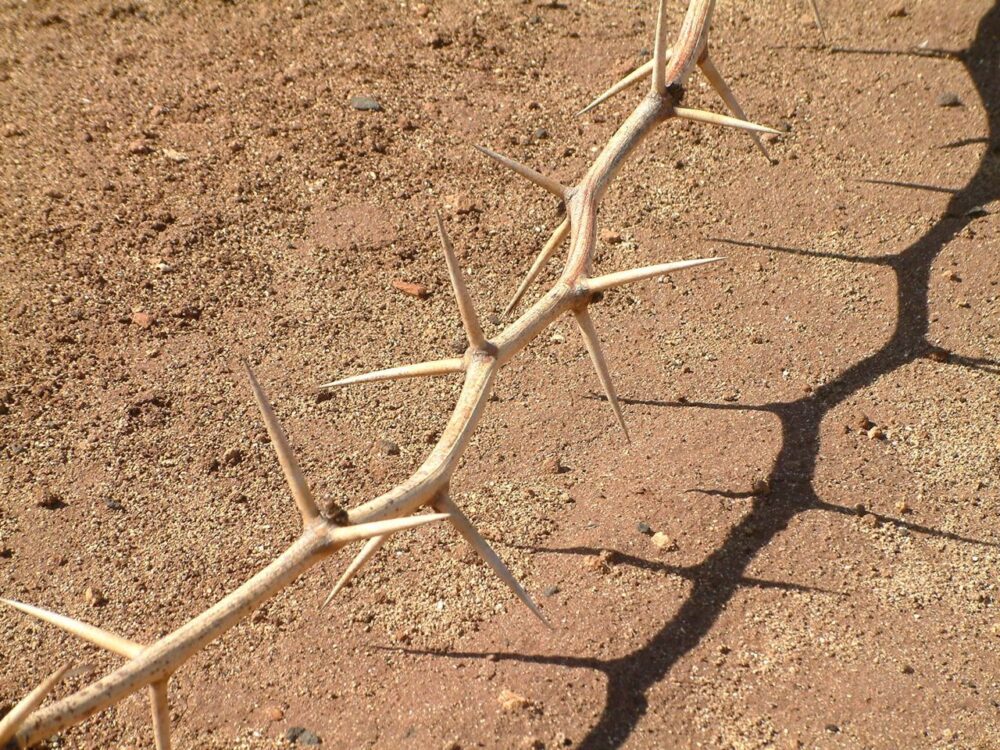
- Long thorn kiawe grows as a sprawling shrub, and is armed with 3-inch long toxin-tipped thorns (common kiawe grows into a tree and has thorns that are either absent or less than 1 in long).
- It is in the legume family, producing multiple seed pods which can tolerate saltwater, are drought resistant, and can persist in the soil for multiple decades.
- As observed on Kauai, the potential range for long thorn kiawe is within a few hundred feet of the high water mark.
- Native to Africa, introduction history is unknown, but first noted invading in 1978. Possibly introduced for agriculture or accidentally introduced.
Impacts
- Grows in dense thickets and crowds out native coastal plants, prevents beach access
- Long, sturdy thorns able to pierce slippers, shoes and even truck tires.
- Produces thousands of seeds per year, which are carried by water and animals
- Despite its relative value as cattle fodder, it encroaches on pastureland where introduced (e.g. South America, Asia and Australia) and is considered a noxious weed.
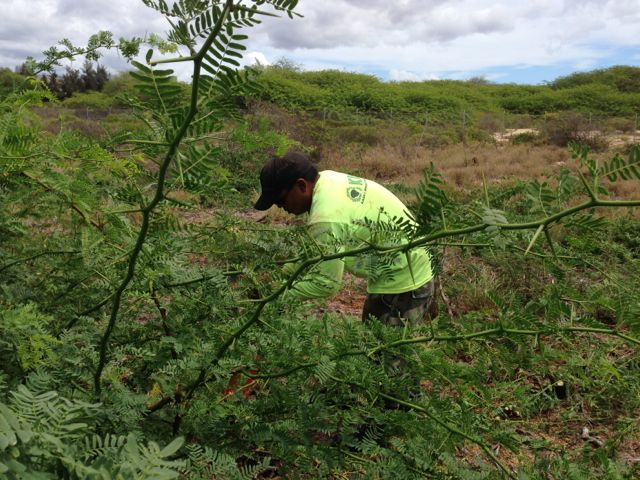
On Kauai
Populations on the beaches of Kipu Kai, Mahaulepu, Barking Sands, Wailua, Kapaa, and the area between Waimea Bridge and Kekaha. Populations also have been reported to be on Niihau. KISC is working with HDOA to control small populations at various locations on Kauai.
On the Pono Endorsement Black List. Pono Endorsed Nurseries and Landscapers have agreed to continue to not sale Long Thorn Kiawe.
You can plant pono by reporting Long Thorn Kiawe to KISC at 808-821-1490 or kisc@hawaii.edu.
Look-a-likes:
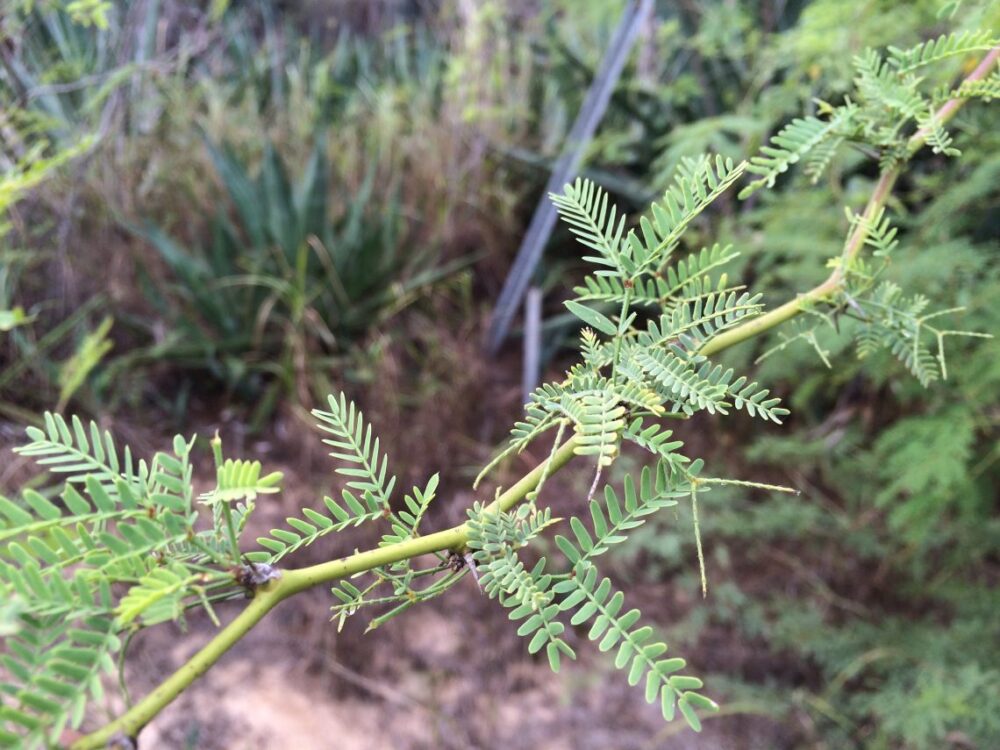
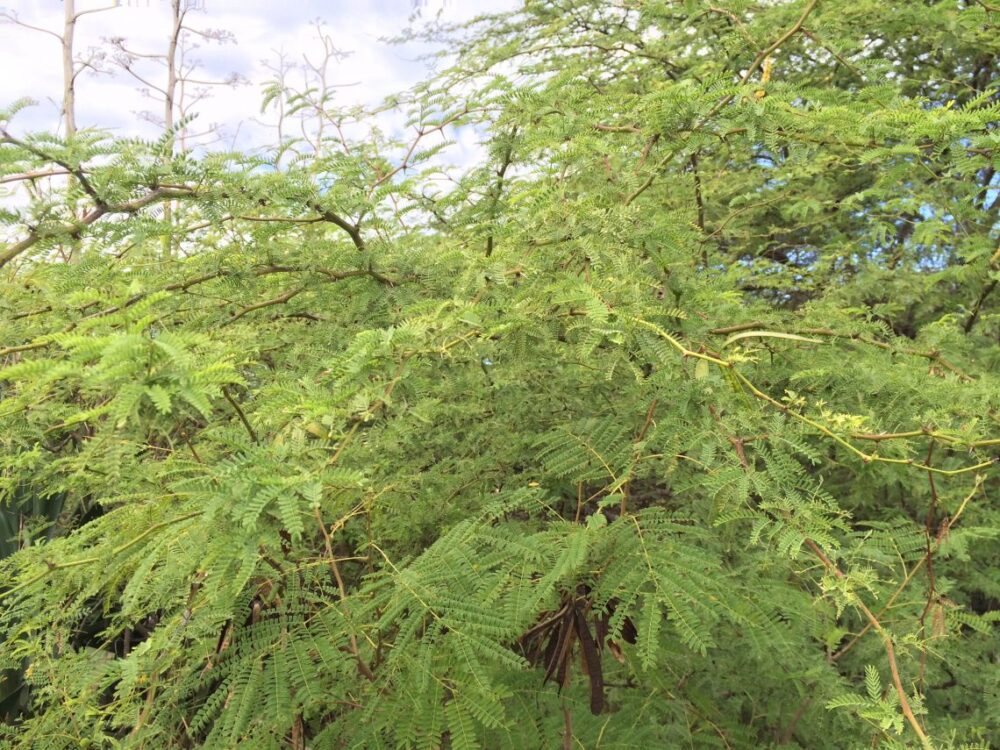
Common Kiawe
Prosopis pallida
While still considered invasive throughout Hawaii, Common Kiawe is not a KISC target because it is already widespread. It can be distinguished by it’s more upright tree structure compared to LTK. Common Kiawe also only has up to 1″ long thorns, compared to LTK’s 3″ long thorns.