Summary
Join us for Forest Talk, a virtual gathering where we talk story about the plants and animals and connections we have to our native ʻōhiʻa forests.
Join us: Thursday, November 12, 2026 at 3:00 p.m. HST
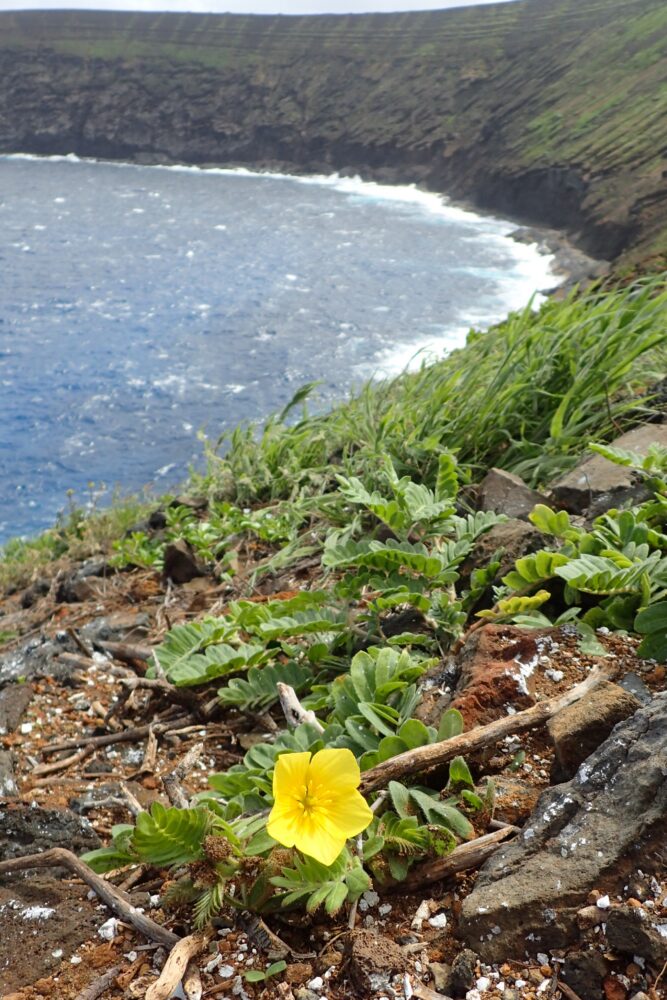
Lehua was already invaded by European rabbits when the first botanical survey was conducted in 1932, and Polynesian rats were reported by the Coast Guard shortly after in 1940, though likely present for far longer. Owned by the Coast Guard but managed by the Hawaii Department of Land and Natural Resources Division of Forestry and Wildlife as a State Seabird Sanctuary, this uninhabited island, 284 acres and 702 ft. in elevation, sits just three-fourths of a mile north of Niihau and 19 miles west of Kauai. Twenty-six plant species were recorded during that first survey, but the original extent of the vegetation was likely far greater and of a vastly different composition than the grassland/ shrubland encountered in 1932. Following successful eradication of rabbits in 2005, the islet went through a second dramatic change in vegetation cover, but the population of rats, which resisted the first eradication attempt in 2008, complicated the island’s recovery. A second rat eradication was eventually successful, ushering in a third transition of Lehua’s vegetation. After four botanical surveys post-rat eradication, the picture of a highly altered and continuously changing flora is emerging. This presentation will highlight some of the changes in the flora that have corresponded with management actions on the island and provide a snapshot of the current status of the plants of Lehua Seabird Sanctuary.
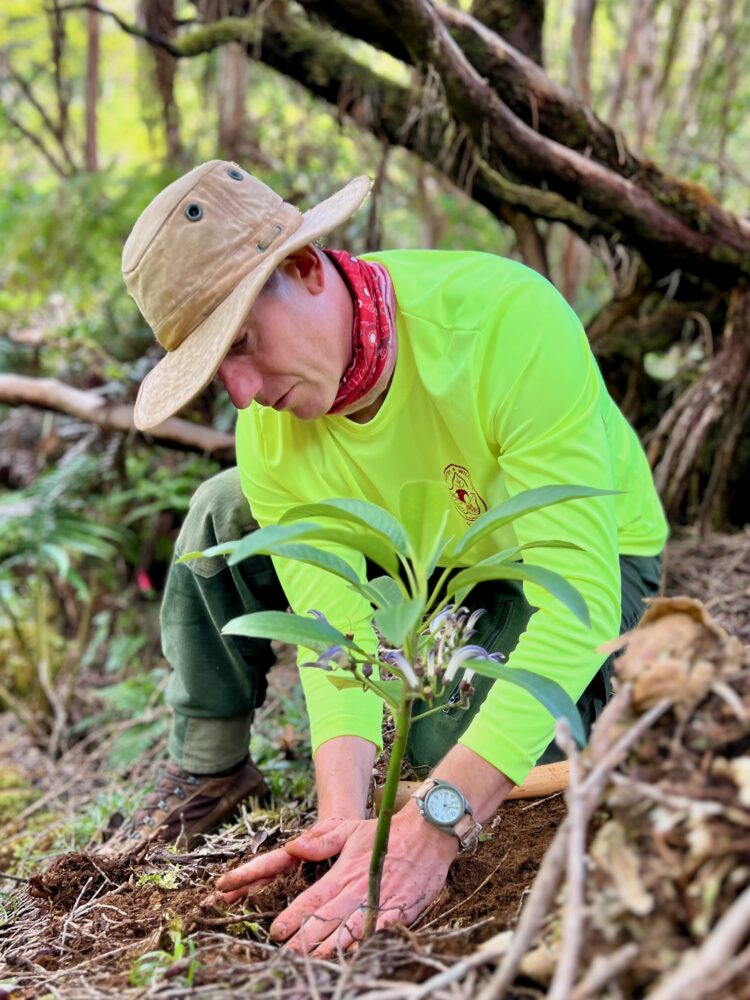
Our guest will be Adam Williams, Kaua‘i District Botanist with the Division of Forestry and Wildlife under the Hawaiʻi Department of Land and Natural Resources.
This talk story will take place via Zoom. Registration required: https://hawaii.zoom.us/meeting/register/KIqlATbGTyi12gvcreeo_A
Have you missed any Forest Talk episodes?
To view our previous Forest Talk stories, visit the KISC YouTube page here: https://youtube.com/playlist?list=PLjKdfZn_qKYZ26jOrO0QAor8ONAEC0__f&si=jv1LD1JvquFWRw8h