Summary
Welcome to the Invasive Informant, sponsored by Kauaʻi Invasive Species Committee. KISC works across Kauaʻi to prevent, control, or eliminate the most threatening invasive plant and animal species in order to preserve Kauaʻi’s native biodiversity and minimize adverse ecological, agricultural, economical, and cultural impacts.
This month, we take a look at the many invertebrates that rely on ʻōhiʻa, Hawaiiʻs state endemic tree and the most abundant tree in the forest.
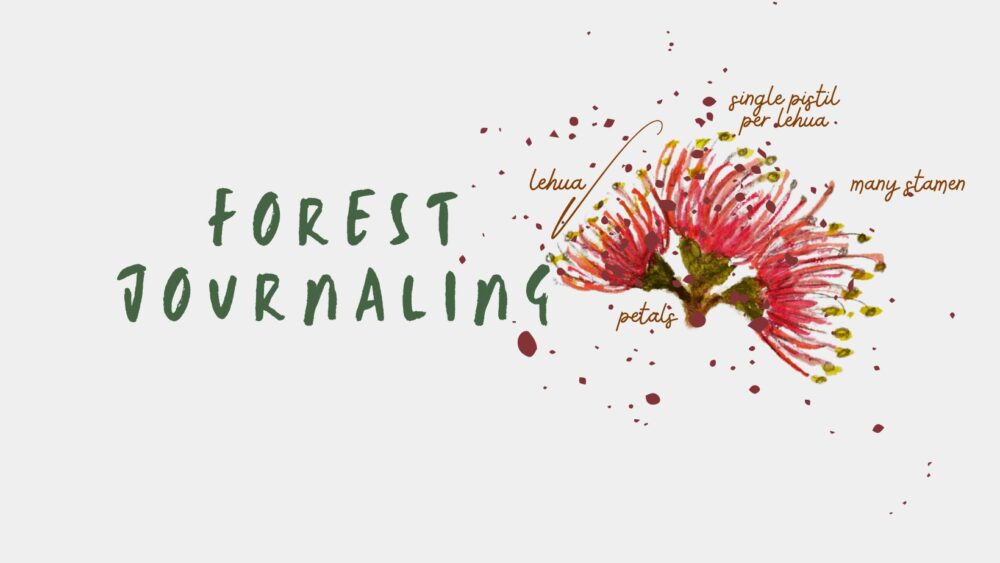
Did you know a single ʻōhiʻa tree can be home to hundreds of different animals? You may be familiar with ʻapapane and ʻiʻiwi and other honeycreepers that rely on ʻōhiʻa for nectar from its blossoms. So do Pulelehua, one of two native butterflies in Hawaii. Native yellow-faced bees also seek ʻōhiʻa for nectar while moths mine leaves, lay eggs in lehua buds, and, yes, ingest the bounty of nectar found on ʻōhiʻa.
A whole bunch of other invertebrates utilize ʻōhiʻa in various ways.
Thereʻs the Kauaʻi Flightless Katydid. Known only in high elevation ʻōhiʻa forests of Kaua’i, as the name implies, these green katydids are flightless and munch on dead flies and beetles, crushing them with their impressive jaws. During courtship, males rub the edges of their wings together, producing a high-pitched song to attract females.
Speaking of flightless, have you ever heard of the Kaua’i Flightless Stag Beetle? They belong to the only genus of scarab beetles native to Hawaii. These rare dull black beetles grow to adult size of one-half to three-quarters of an inch and survive in high-elevation koa – ʻōhiʻa forests in Kokeʻe State Park, usually in soil and logs.
Then, there are spiders. Hawaii has, at least, 132 native species of spiders. One genus, the Long-jawed spider, is noted for the spectacular ability to adapt to different ecosystems and microhabitats, resulting in numerous different species ranging in size, color, shape, and behavior. One unique adaptation is that some species have abandoned web-spinning and adopted a wandering hunting lifestyle.
And letʻs not forget Hawaiiʻs only terrestrial native mammal, opeʻapeʻa, or the Hawaiian hoary bat, that roosts and nests in ʻōhiʻa.
Curious to learn more? Weʻll be sharing more information like this at our upcoming Forest Journaling Workshop on Tuesday, February 27, 2024. Click here for more information and to register.