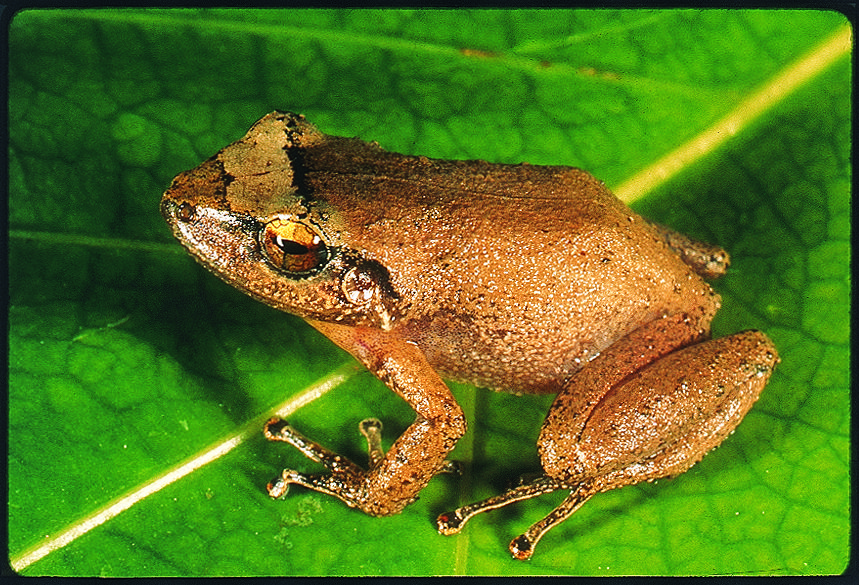
Coqui Frog
REPORT IF SEEN: This species is currently controlled by KISC, if you see it please report it.
Coqui Frog
Species: Eleutherodactylus coqui
Order: Anura
KISC is responds to new coqui frog introductions to prevent the re-establishment of coqui on Kauaʻi. Sightings of coqui frogs should be reported immediately. If you suspect that you heard coqui calls on your property, KISC will survey and if confirmed, will remove the coqui for free.
After an extensive 10 year, multi-agency effort, coqui frogs were successfully eradicated from Kauaʻi in 2012. Unfortunately, coqui frogs continue to hitchhike here from contaminated areas on other islands. The community has been essential in keeping coqui from re-establishing on Kauaʻi by quickly reporting calling frogs.
Description
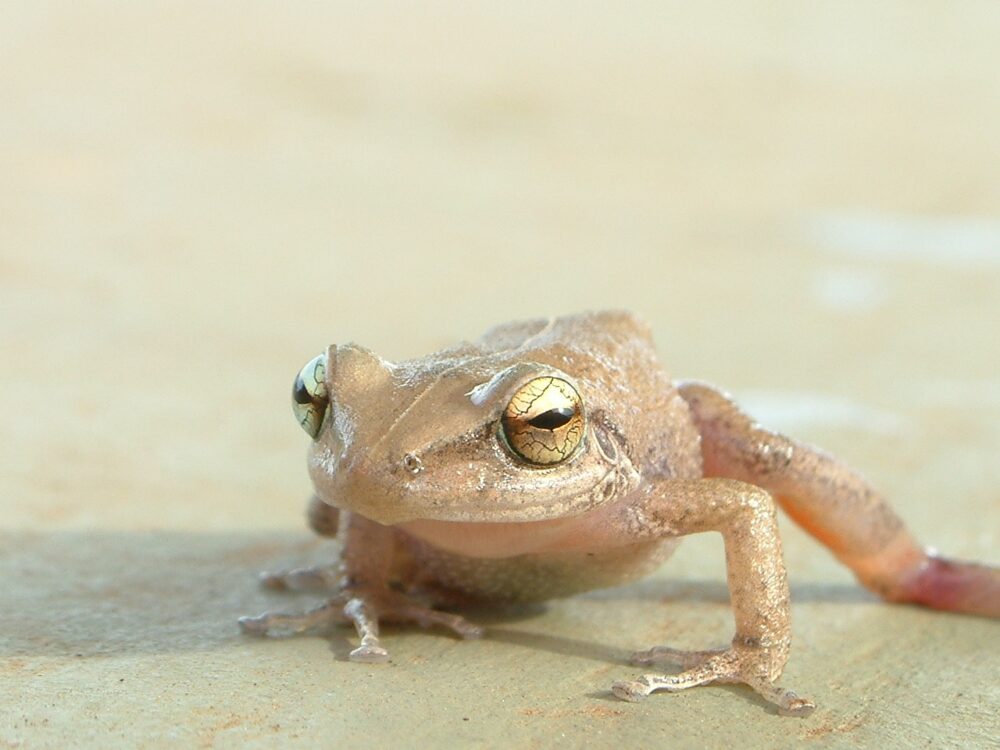
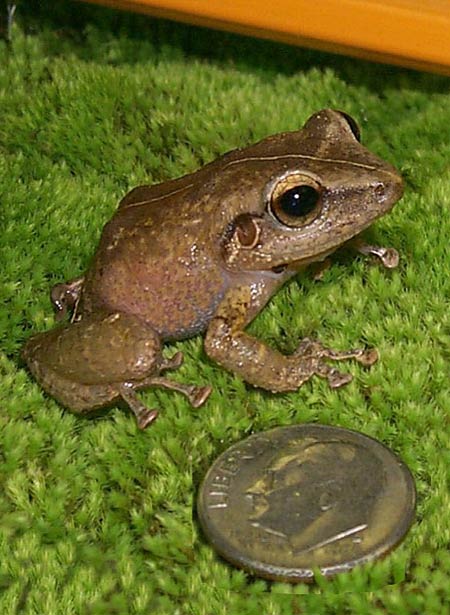
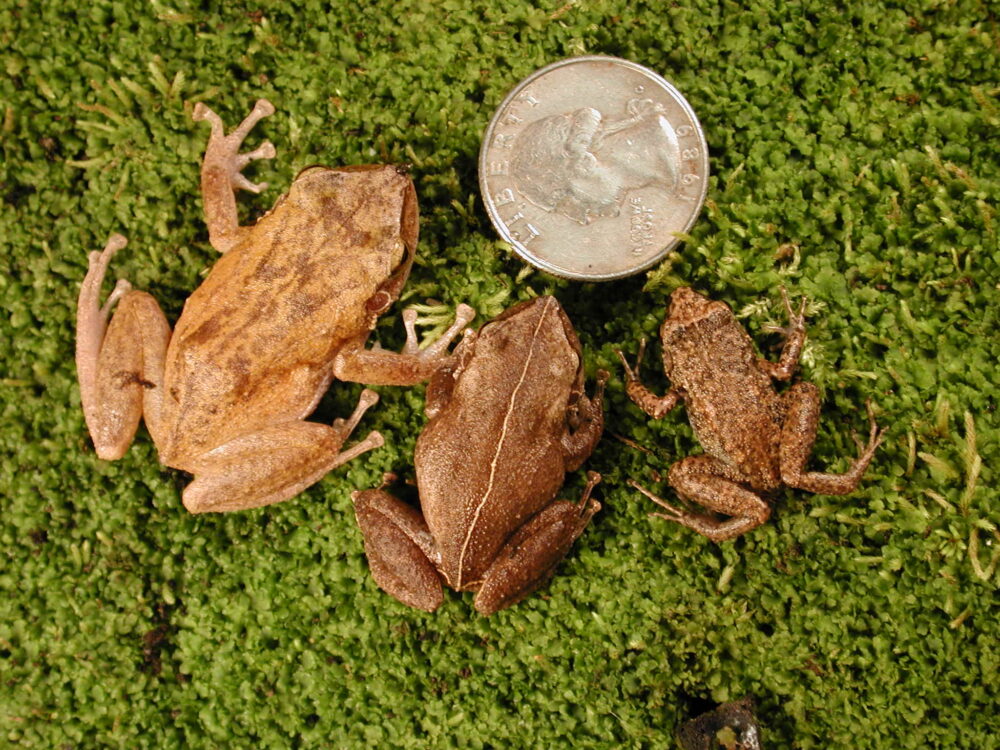
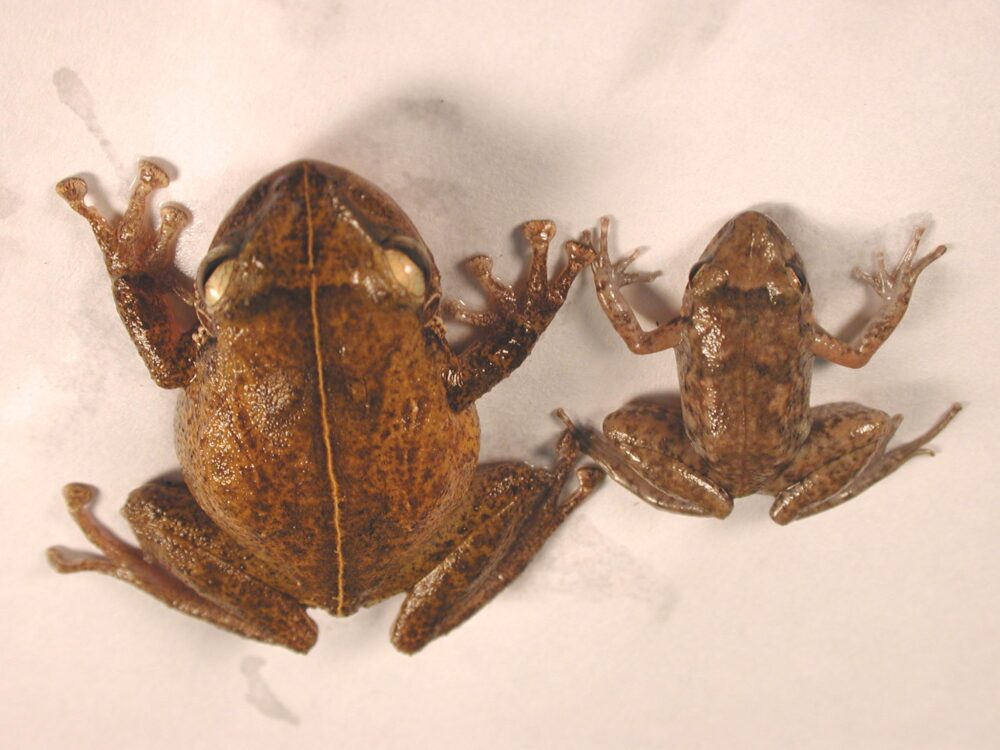
- Small, nocturnal (night-active) frog about the size of a quarter, up to two inches in length
- Color ranges from tan to dark brown, may have a lighter stripe down its back
- Male’s mating call is a two-note, high-pitched “co-qui” (pronounced ko-kee)
- Native to Puerto Rico, accidentally introduced to Hawaiʻi hidden in plants around or before 1988
- All frogs in the order Anura are Hawaiʻi State Injurious Species. It is prohibited to release Injurious Species into the wild; transport them to islands or locations within the State where they are not already established; or export outside the State.
Impacts
- No natural predators to keep populations in check (and no natural competitors), populations have reached 55,000 frogs per hectare in some Hawaiʻi populations (24,000 frogs per hectare in Puerto Rico)
- Eat huge quantities of insects, removing insects from forest floor to treetops.
- Creates loss of insect services such as pollination
- Disrupts the balance of vulnerable native ecosystems and has been known to change the chemical composition of the forest floor
- Produces loud, incessant and annoying call from dusk until dawn (up to 90db)
- Has been known to cause adverse economic impacts on tourism
- Presence of coqui hinders export of plant sales
- Coqui presence disclosure requirement for real estate transactions, has resulted in decreased property values in some locations
On Kauai
A breeding population of coqui covering about 10 acres was discovered in Lawai in 2001. After extensive efforts by KISC, HDOA, and other partner agencies to eradicate coqui from Kauaʻi, Lawai was officially declared coqui-free in June 2012.
Coqui frogs continue to hitchhike to Kauaʻi from contaminated areas on other islands. It is important to report suspected coqui frogs immediately so that KISC and HDOA crew members can immediately capture and eliminate them.
The Pono Endorsement program promotes Best Management Practices to help stop the introduction or spread of coqui frogs. Pono Endorsed Nurseries and Landscapers are doing their part to stop the introduction of coqui frogs by adopting pono business practices that help keep Kauaʻi coqui free.
You can help plant pono by reporting Coqui frogs to KISC at 808-821-1490 or kisc@hawaii.edu or HDOA at 643-PEST.
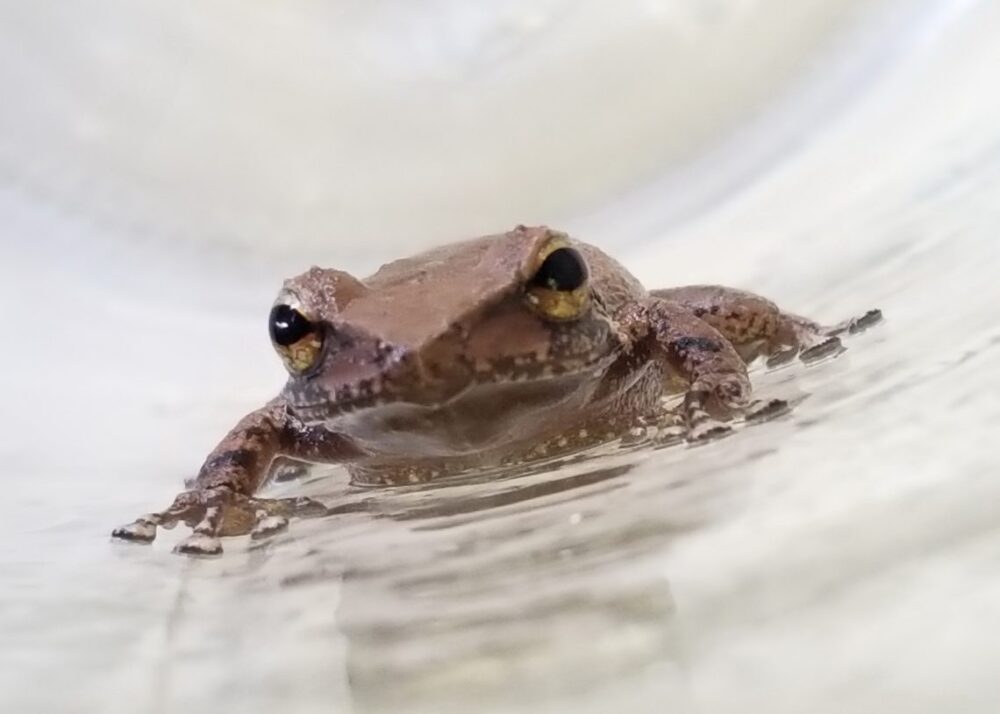
Look-a-likes:
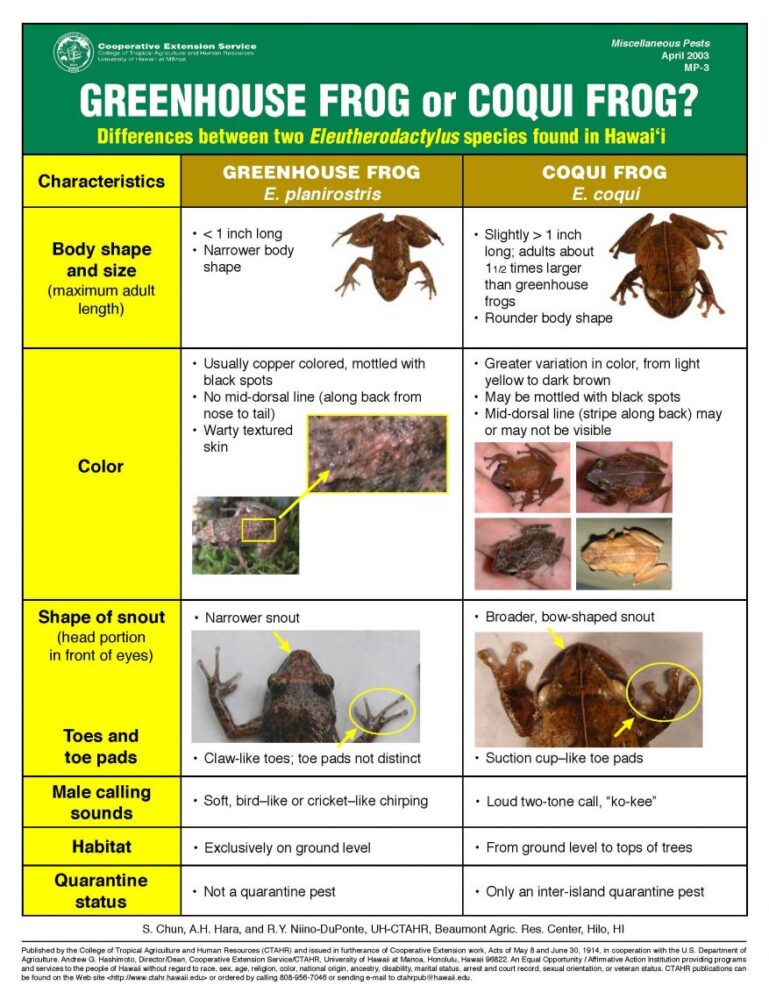
Greenhouse Frog
Eleutherodactylus planirostris
The greenhouse frog is widespread throughout Kauaʻi. This small tree frog is usually slightly smaller than 1 in. Usually copper colored with WARTY TEXTURED SKIN. Narrower snout and less distinct toepads than the coqui frog. CRICKET-LIKE VOCALIZATION. Found only on the ground.
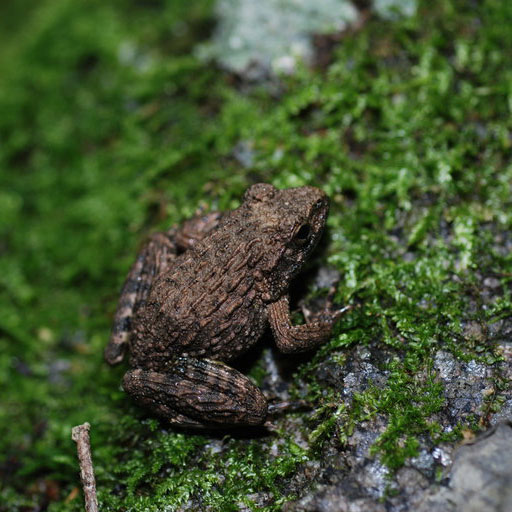
Japanese Wrinkled Frog
Glandirana rugosa
The Japanese wrinkled frog can be found on Kauaʻi. Unlike the coqui, Japanese wrinkled frogs have the true frog tadpole stage and need freshwater habitats to survive. They breed in rivers, reservoirs, and wetlands. The adult frog is larger then the coqui ranging from 1-2 inches and is not known to be found in trees.