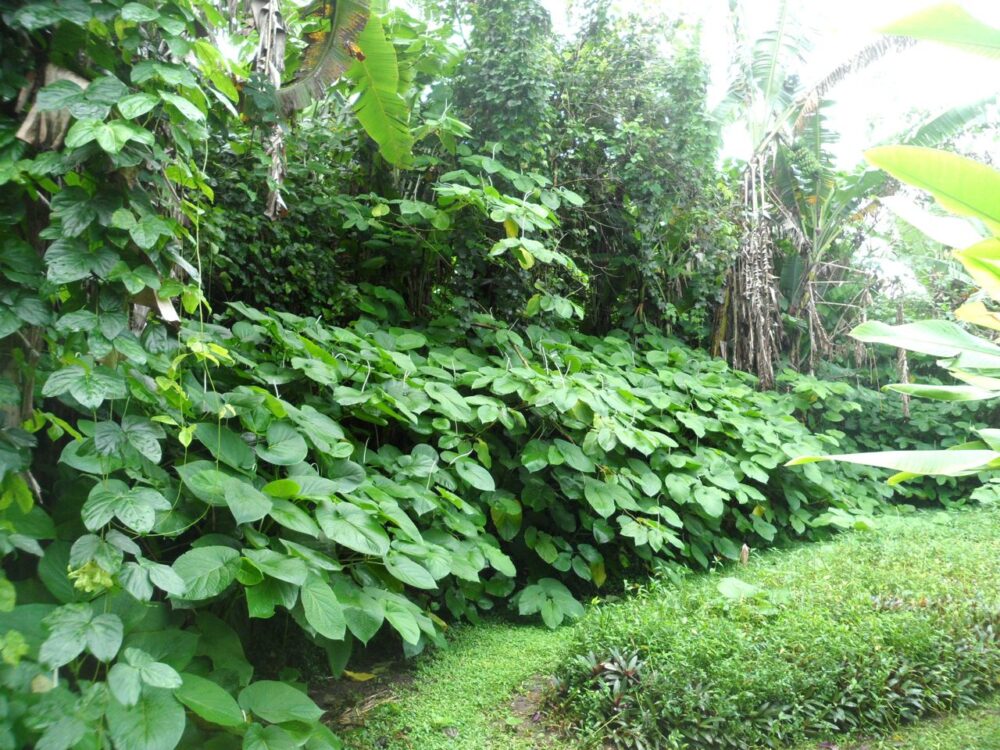
False Kava
REPORT IF SEEN: This species is currently controlled by KISC, if you see it please report it.
False Kava, False Awa
Species: Piper auritum
Family: Piperaceae
KISC is actively controlling this species. Sightings of this pest should be reported immediately. If you suspect that you have any of our targets on your property, KISC will survey and if confirmed, will remove it for free.
Description
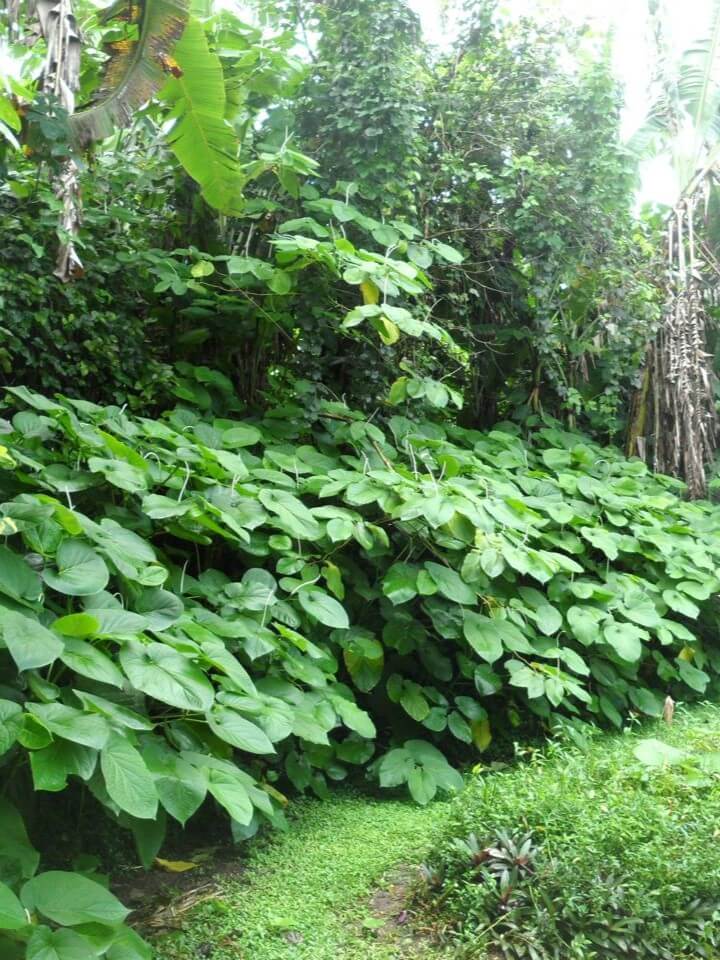
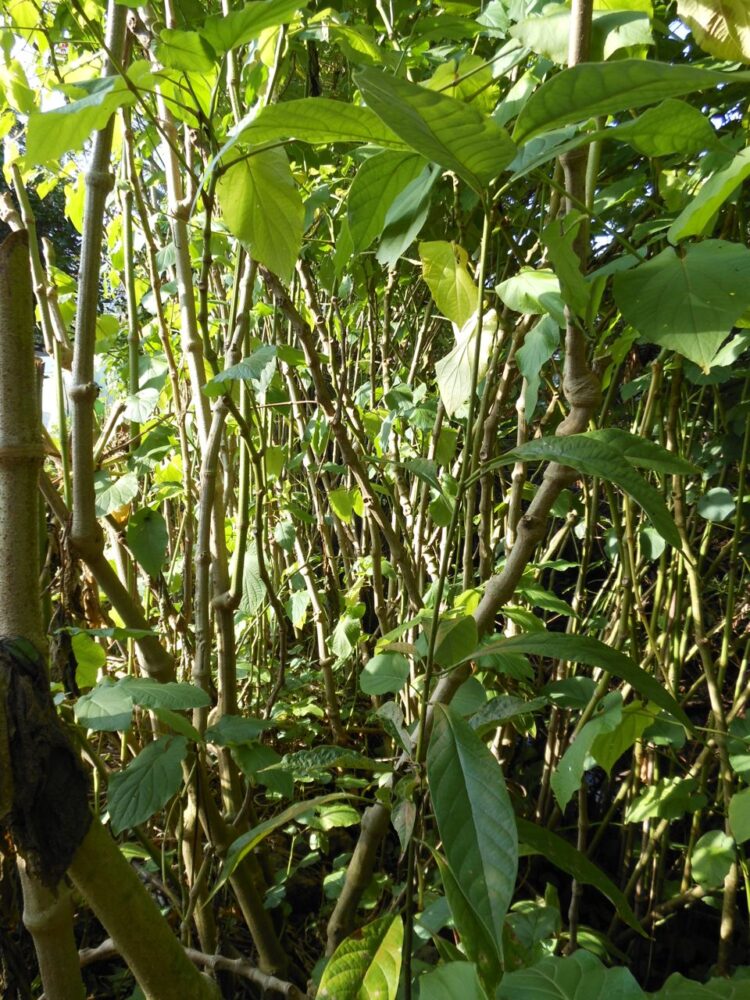
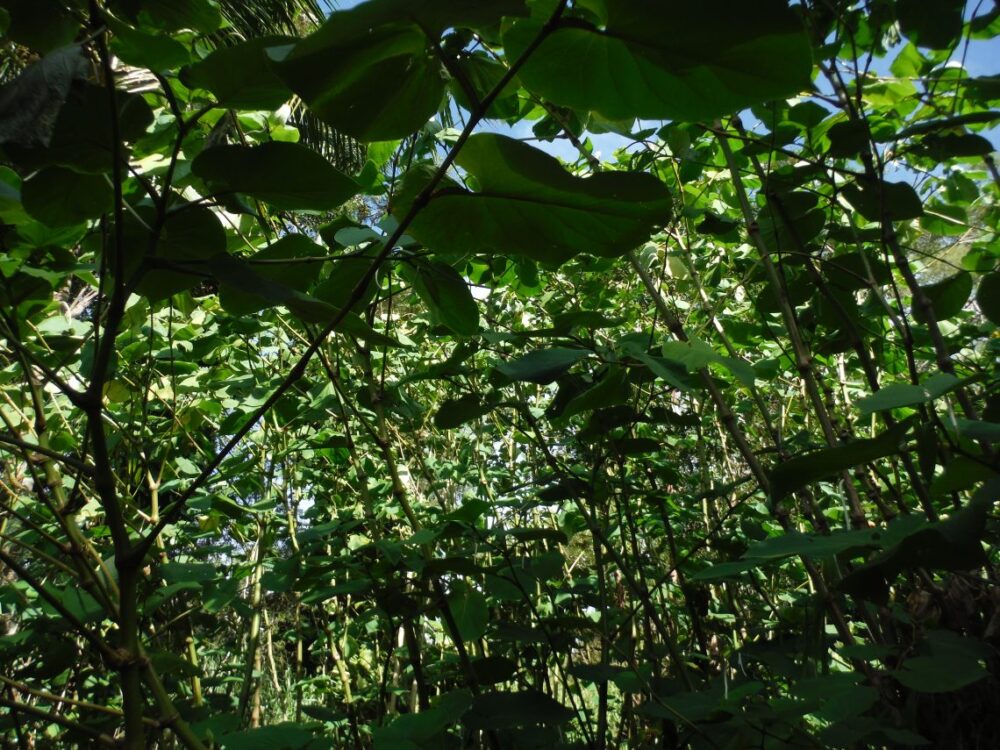
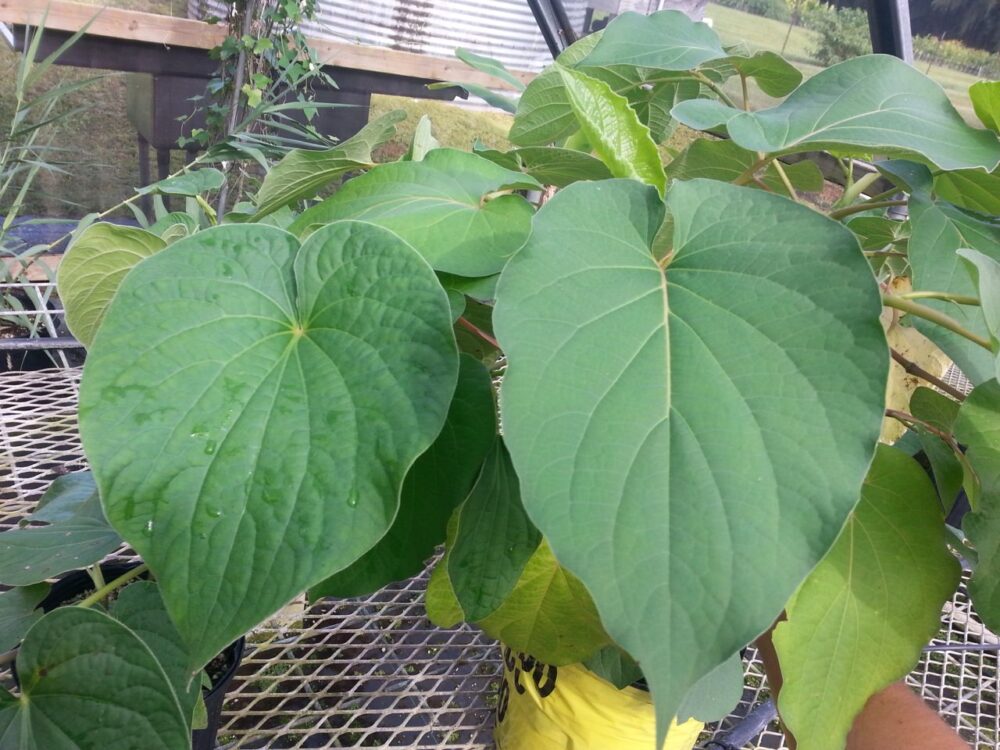
- Shrub-like plant that can grow to 6 m (19 ft) high.
- Mistakenly planted as true kava (Piper methysticum).
- Characteristic rootbeer or anise-like odor when leaves are crushed (only distinctive on false kava and not true kava)
- Native to tropical America, the exact introduction histories for both species are unknown. It is believed to have been accidentally distributed or planted in Hawaii as true kava in the 1990s.
Impacts
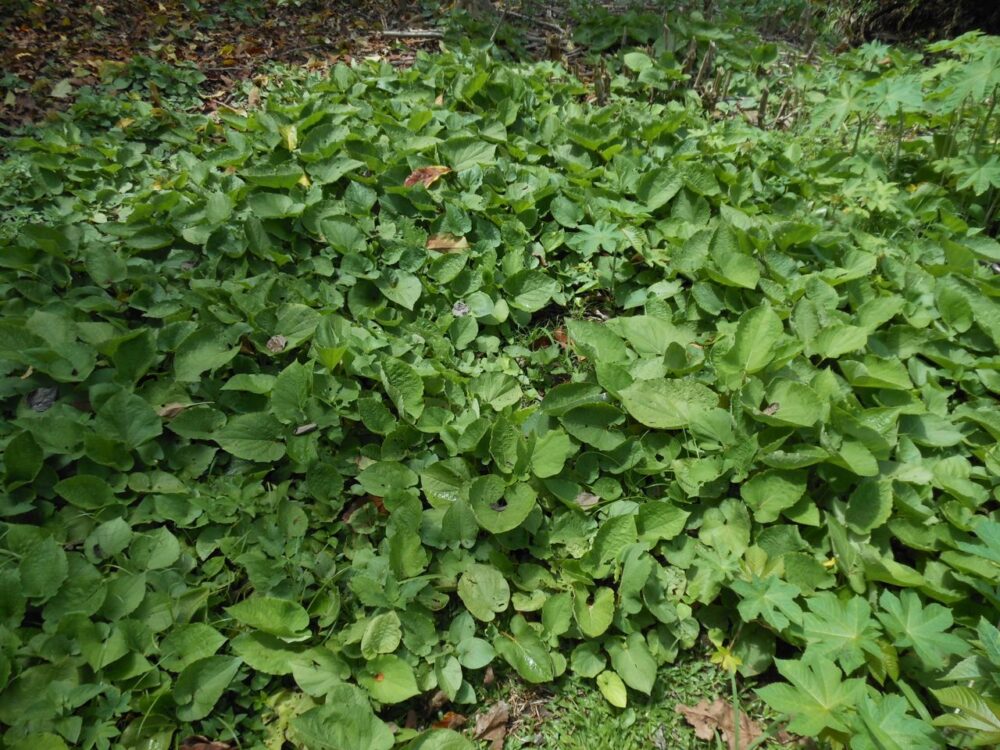
- Thick growth and spreading root suckers displace other plants
- Extremely difficult to control, as root pieces, stems, and leaf margins re-grow when cut
- Grows more than twice as fast and out-competes true kava plants
- Harvesting and mixing false and true kava for exports and local sale vastly degrades the quality and value of the crop. False kava does not have the same medicinal attributes as true kava.
On Kauai
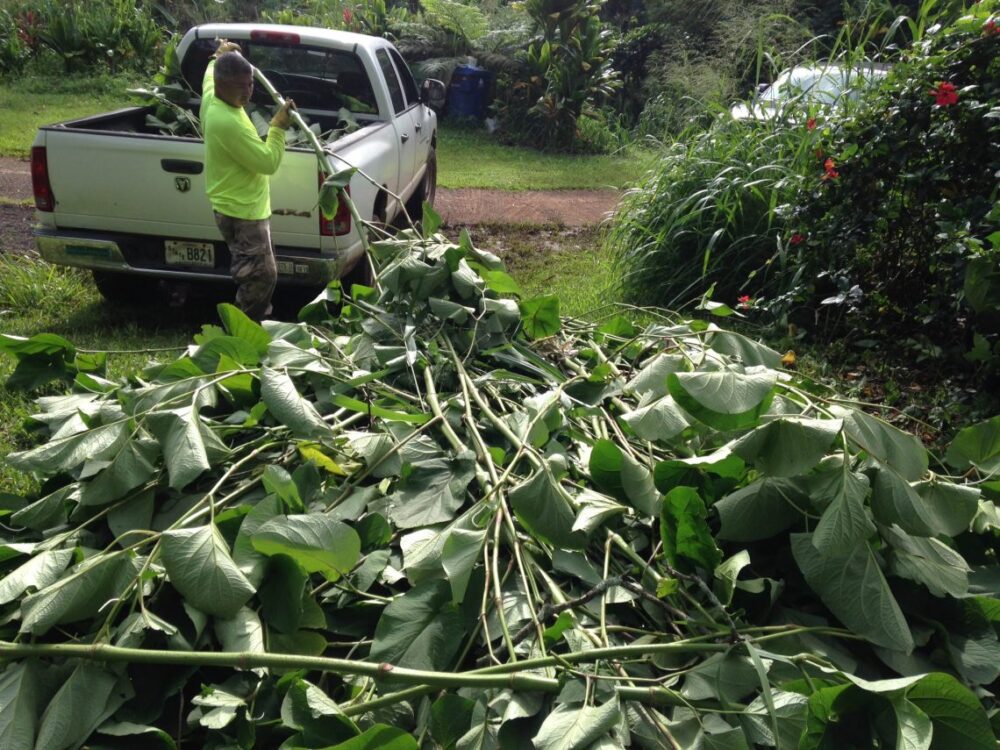
Known populations are being treated in Lawai, Anahola, and Kilauea. KISC is working to control this species and educate awa growers about this threat. False Kava is commonly mistaken for awa.
On the Pono Endorsement Black List. Pono Endorsed Nurseries and Landscapers have agreed to immediately discontinue the sale of False Kava.
You can plant pono and help the Kauai awa community by reporting any False Kava to KISC at 808-821-1490 or kisc@hawaii.edu . Check out the difference between false and true awa below. KISC crew members can remove it from your landscaping free of charge and provide you with true awa as a pono replacement.
Look-a-likes:
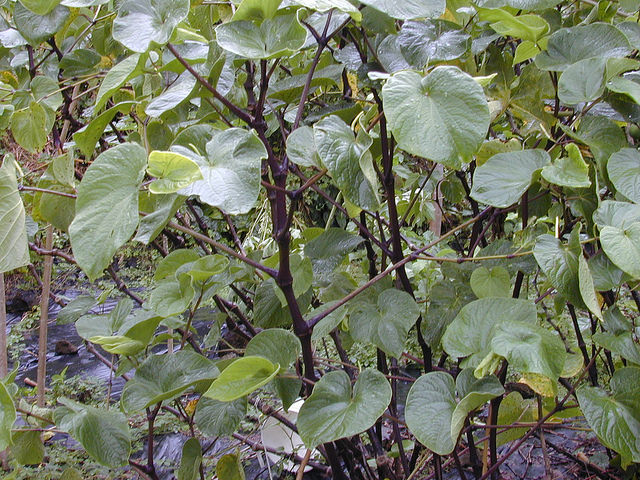
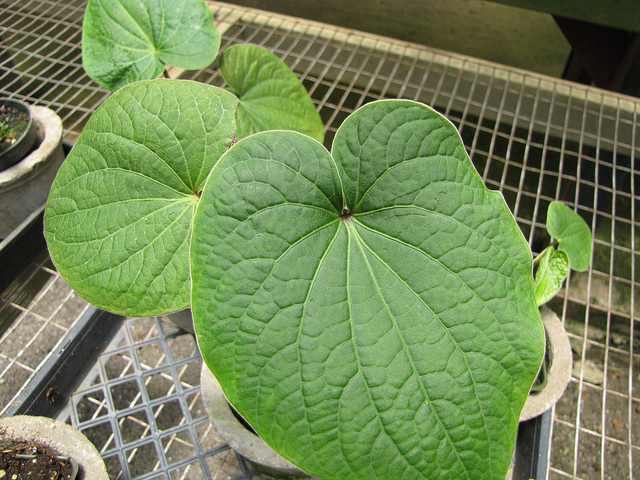
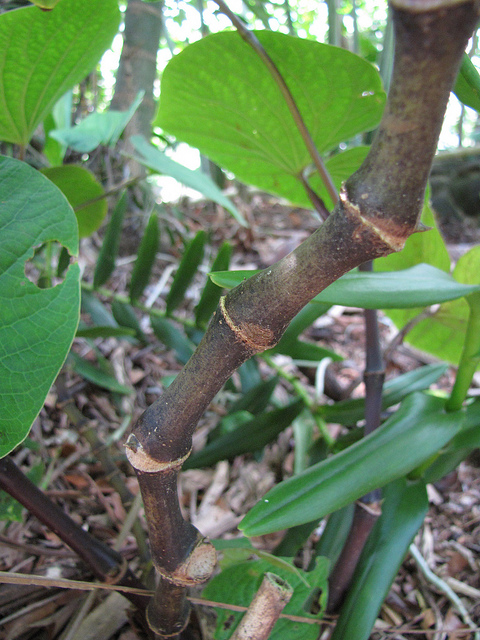
‘Awa
Piper methysticum
‘Awa is False Kava’s main look-a-like. In fact, False Kava was brought to Hawaii mistakenly, as someone thought it was true ‘Awa. Leaves differ from false kava and can be distinguished by their vein pattern. True awa have leaf veins originating from the stem-end. False kava leaves have a central mid vein with smaller veins that branch off of the central vein.